As far back as I can remember, I longed for a best friend. I guess a best friend represented the equivalent of a beloved partner or even parent who placed me first and loved me differently, more than any other. Something about being chosen and special; some of the major things that are missing in the neglect experience. I felt the opposite: invisible, unimportant, forgotten, or simply “a pain in the neck.” I’m not certain she exactly said I was a pain in the neck, or I need this like a pain in the neck. But it hardly matters. I felt like I didn’t, matter that is. That will certainly make a child feel hopeless. “I don’t matter” became kind of a signature I repeatedly heard from trauma and neglect survivor clients. The other day I heard a program with an author being interviewed who recently wrote a book about what he called “mattering.” He was citing his research that showed that the experience of feeling like one matters and has value in the eyes of an important other radically affected people’s scores on scales about mood and motivation. I was reminded of Bob Dylan’s timeless line about how you don’t need a weather man to know which way the wind blows. How well we know that! All too often I see that the ennui that comes with the pervasive feeling that “nothing matters” goes back to precisely that. I don’t matter.
In fourth grade I finally had a best friend. I was in heaven. Her mother was a tennis player who I thought was fun, if somewhat eccentric in her ways, although I did not know that word then. She made great sandwiches for us, very American. I think it came out later that she was hooked on “mother’s little helper,” valium. But I just knew that she took us out regularly for tennis lessons, probably mostly to keep my friend’s weight down. My friend and I were inseparable. She did not have a TV at her house, so she loved coming to our house and we sat together in front of our old black and white, during the wet winter months. For years I joked that fourth grade was my best year ever, and it’s been all downhill ever since. It was really only half in jest for many years.
The bubble burst in fifth grade, when my friend dropped me, preferring another girl, who was a tiny blond with her perfect hair in a “flip” and a super-fast runner: always picked first for the kickball team. She was an amazing kicker too. But more than that, she had a canopy bed, a pink princess phone and her own TV in her room. I could not begin to compete with that. I was heartbroken.
From there on my life was back to being a desert of emptiness, aloneness and feeling like another species, unsure whether I even existed at all, and if yes, what for? There was a popular song around that time about the end of the world: “it ended when I lost your love.”
Friendship for whatever reason, seems to be something of an underrated “stepchild.” When there is a death, everyone seems to have great sympathy and condolences for the parents and the intimate partner or spouse. I have noticed that when a parent dies, the majority of the time the children of the deceased are forgotten in the flood of empathy for the widow or widower. Friends seem to fall off the map completely. Only those who may be ejected or overtly rejected by the family they nominally grew up with seem to have a category for “chosen family.”
Friendship-Wreck
My friendship trajectory was one failure after another. Mostly because of what I call the profound interpersonal ambivalence that comes of the neglect experience. The deadly fear of abandonment, makes the longed-for intimacy too risky. The attempts to be both closely connected and safe invariably sank, with neither objective achieved. Oy vey. For me the most common mistake was “over-giving,” trying to earn value in the eyes of the other, by dazzling them with what I could offer or do for them, which was of course unsustainable, and they never signed up for it in the first place. When I found myself depleted, or did not receive reciprocity that had never been agreed to, I felt short-changed, used and resentful. I did not get it about consent, or making “deals” with people that they did not even know about. All this has become part of the “Neglect Profile,” which has evolved over many years, because it characteristically or often shows up in my neglect survivor clients.
I learned my lesson most graphically in 2000 when I was in my Sensorimotor Training in Boston. I had the privilege of being in a group taught by Pat Ogden herself. The assistant teachers were Deirdre Fay and Janina Fisher. Can you best that? It was worth commuting from San Francisco to Boston monthly for five years. It was one of the great experiences of my life to date. And I had a best friend in our group. One of our group members even referred to us as “the popular girls.” Unheard of in my experience. Fortunately, it was after the training ended and I was happily certified, that I blew that relationship up. But my friend was angry enough to say to me “It is not safe to receive from you!’ And I learned the hard way, “If I over-give and then resent, it is on me!” I try to teach this whenever I can.
Fast forward many years of hard work on my trauma and neglect. Many people have friends going back to early childhood. I don’t have that. But I have a best friend who dates back to 1983. We have had our storms, but found our way through together. Although we live on opposite sides of the Bay Bridge, we manage to get together without fail every month. I am so grateful. There is no substitute for an old friend, and it is also said there is no mirror like an old friend.
And now, janina
Back in the old Sensorimotor Training days, I never imagined that I would be close friends with Janina. And now I am. She is an extraordinary clinician, human being, long-time social justice activist, and friend. I feel again so privileged and grateful to enjoy her friendship. And she has embraced my husband as well, and he her, which is an additional plus.
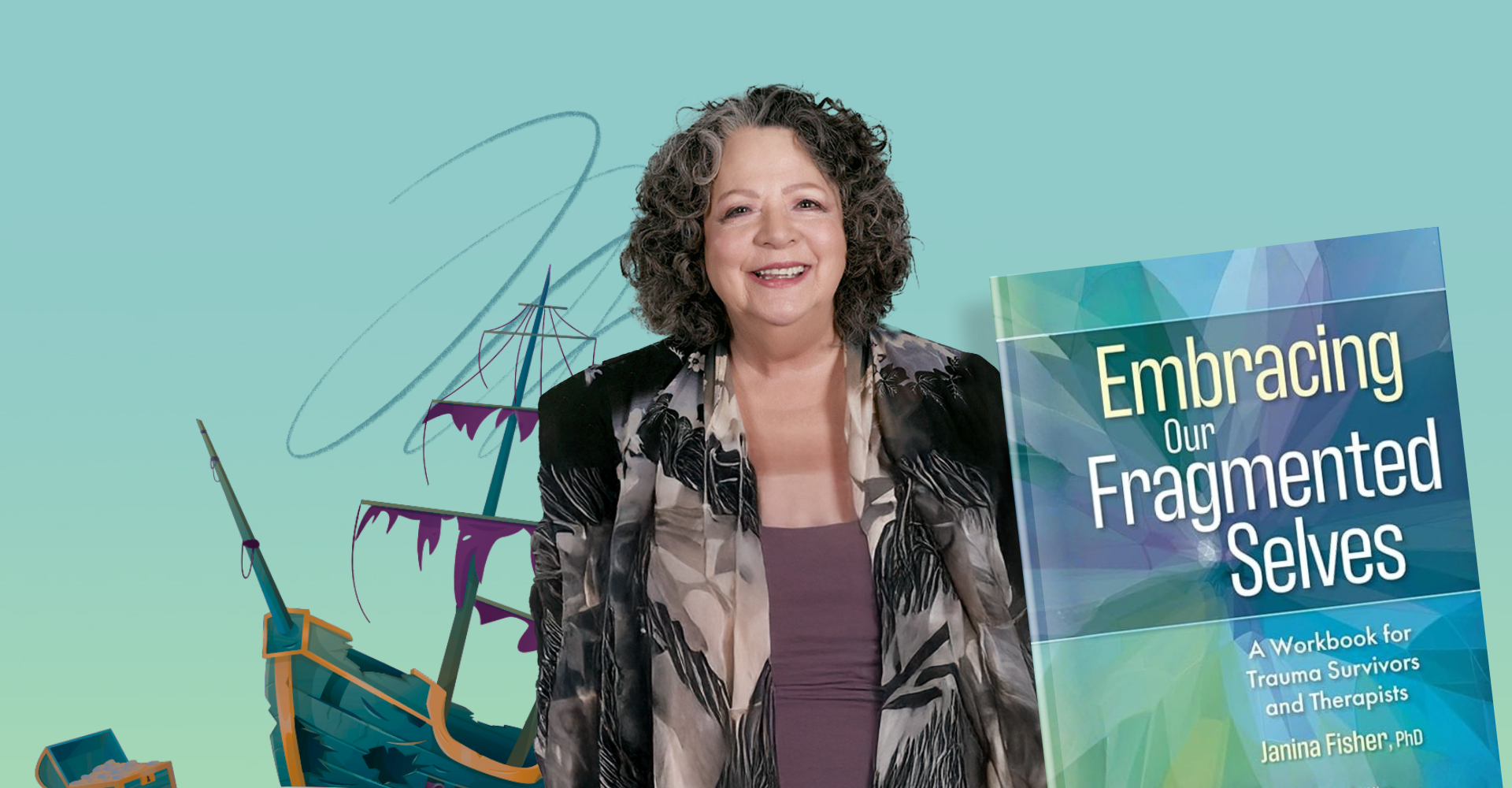
It is with great pleasure that I celebrate with Janina the recent publication of her most recent book, Embracing Our Fragmented Selves. I am thrilled and excited to welcome her to our video series next week. Do watch your inbox for it! You can find the book, wherever you usually buy your books. Let’s blow her away with five-star reviews, which are well earned. And do keep doing the work on your trauma and neglect. It takes a while, but the rewards truly matter! It is worth it!