I continue to be mystified by my fascination with professional athletes and their stories. As I have said many times, I have never been a spectator of any sport, with the exception of watching my beloved nephew playing baseball in college 25 years ago. However, I have read every athlete biography, autobiography and memoir that I hear of, and when there is a news story about the characters of that world, certainly where social justice is concerned, I am riveted and follow it doggedly. Basketball is no exception even though the local (-ish, as their “hometown” is as fickle as everything else in that industry,) team, the Warriors have been such a phenomenon in the San Francisco Bay Area, USA where I live. I was delighted to learn that the superstar, Steph Curry, had used neurofeedback as part of his training. And over the years, I read the memoir of Kareem Abdul-Jabbar, a legendary player who wrote a lovely memoir about his career, centering on his important relationship with his similarly legendary coach and mentor John Wooden while at UCLA and throughout his life. I still have inspirational quotes from Coach Wooden, all over the place. When in 2022, WNBA basketball star Britney Griner, a decidedly out lesbian was detained and held in a Russian prison camp for almost a year for possessing a miniscule amount of cannabis oil, I was compelled by the story, and shivered in every way as I followed it
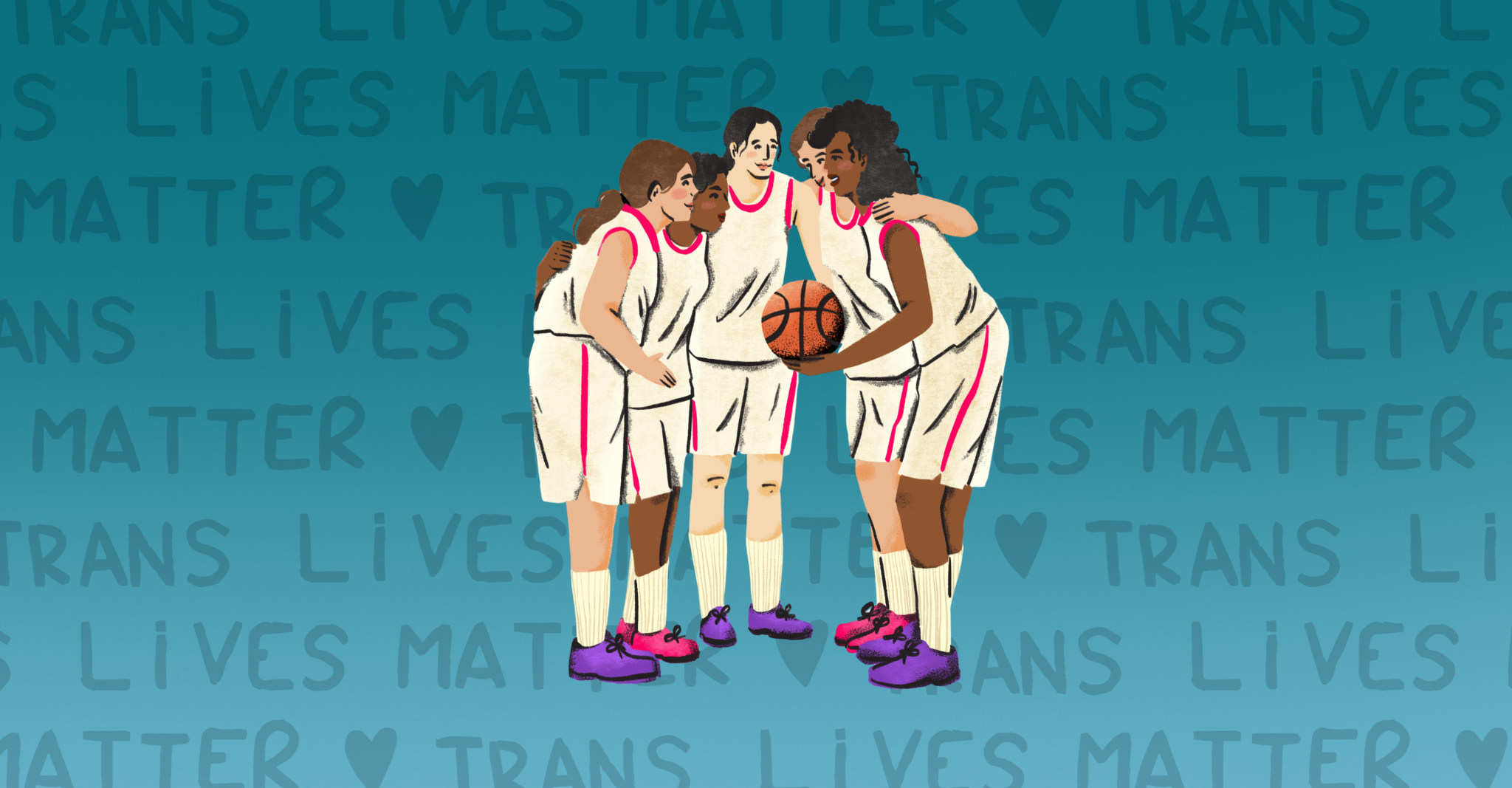
Women’s basketball has become a presence in recent years, with WNBA games attracting unprecedented crowds compared to the past, and commanding similarly unprecedented ticket prices. Most recently women’s basketball has become a focus for right wing anti-trans activity with protesters in provocative clothing sporting anti-trans sloganeering, recently disrupting a local game. Prominent members and coaches of the local team took a stand in support of trans women’s athletes, although management and owners remained blaringly silent. Sport has been a platform for political expression and action going back thousands of years to Olympic Greece, and as ever I am gratified when it continues to be utilized as such, preferably without great human/personal cost, although that is rarely the case. It continues to be heartbreakingly distressing to me, the way trans folks seem to be among the least understood and most harshly ostracized of minorities. It is no surprise that they suffer profound mental health symptoms.
I might add, that although I am very much a student of the body, I continue to be a wordsmith, and I do love words. It troubles me that the word transition has come to mean two seemingly to me, opposing processes. On one hand it is used to describe the process of restoring one’s authentic gender, of bringing into full embodiment one’s true nature, an emergence into true life. It has also come to be reference the final crossing into death. Two very important life passages, oddly utilizing the same word.
Intersectionality
Only recently have I come to learn and understand the meaning of the word intersectionality. Coined in 1989 by US legal scholar and civil rights activist Kimberly Crenshaw, it is the co-existence of more than one threatened minority status. If being part of one oppressed group puts one at risk that confluence compounds the damaging impacts and makes life a composite, treacherous map of perilous crossroads. Many the child of neglect, with early attachment trauma as the base, have layered experience of other sorts of trauma that in effect pile up over time into heavy sedimentary rock. This is of course all too often the case, as many of us can amply see in ourselves, and/or our clients and others. It was only in 2024 when her memoir appeared, that I learned that Britney Griner too, in her barely pubescent pre-teen years, was already taunted with transphobic harassment, which in her case, was not how she even how she self- identified. Layered on to that was the haunting racially motivated murder of a relative in her youth, well before her nightmarish story of apprehension and imprisonment. And neurodiversity.
All too often, neglect is merely the invisible beginning of the story, perhaps coinciding with and enabling subsequent trauma and invisibility to pile on. When one is unseen and unprotected, of course risk is heightened. Born in a war zone, be it literally where bombs and drones are a daily occurrence, or more figuratively where the enemy is race, gender, orientation, poverty, disability “divergence” (physical or mental), homelessness, age… on and on and on. The more concentric circles, the more complex the healing. And the more as therapists, we are faced with in the challenges of healing: our own and our clients.
Belonging
We humans are hard wired for interdependence. We are pack animals, designed travel together: to fly together as flocks, to migrate together in herds. Oxytocin, the chemical of connection, is anti-inflammatory. It heals the body. For both Britney Griner, Colin Kaepernick and who knows whom else, the attachment to a primary other: a partner, was what most sustained them. Survivors of neglect, for whom dependency was the site of the original wound of course, readily default to self-reliance, and eschew it. Understandably. Our greatest challenge as survivor and/or therapist is to risk moving beyond self-reliance into affiliation and connection, which as far as I am concerned, continues to be the way to go.
It saddens me that group therapy seems to be somewhat of an endangered species. At least where I live. I can understand this, having run ongoing therapy groups for almost 20 years. They require more logistical/organizational effort, and in my case late evening hours. I felt I had done my time when I gradually phased them out in 2017. But as Judith Herman identified in the first essential trauma book I ever read, Trauma and Recovery, (Basic Books 1992) the group is an essential and powerful vehicle of healing from trauma. For neglect survivors, it perhaps softens the shock of interdependence by spreading it over more than one important other. In my stint working at the Veterans Administration Hospital with Vietnam vets in 1988, we operated on the same principle.
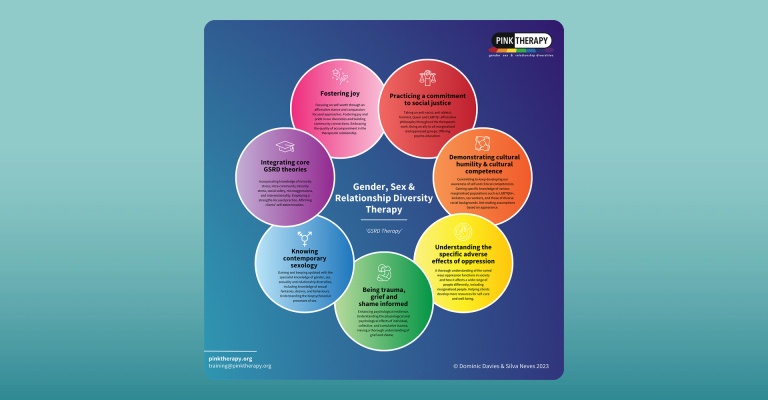
I recently heard a talk by UK therapist Serge Nicholson, who initiated a program where GSRD (Gender, Sexuality, and Relationship Diverse) people could come together and cook, eat and process their feelings. Because he was able to get funding through the UK Clare Project, the food, and the therapist led process group all were completely free for participants. It is a powerful healing experience for all, including Nicholson himself.
Loneliness and impoverished or troubling interpersonal lives are what is most likely to bring neglect survivors to our offices. Being part of something, connected to someone is essential to our health and happiness. And in today’s world, but probably always, intersectionality is more the norm than the exception. Any hard demarcation between social justice and trauma/neglect informed psychotherapy is becoming increasingly blurred. I find that those integral parts of myself are finding their intermingling. The challenge is to steer clear of overwhelm about the task! That is where we need each other. All the great thinkers and doers seem to be talking about and teaching hope. Sustained action and hope. We must help each other with that. Lots of hoops to jump through.
Go Valkyries!