When I began my sex therapy training in 2000, I thought of myself as reasonably sex positive. I remember hearing a celebrated and renowned sex therapist/researcher say at a conference, that people become sex therapists because they think about sex 24 hours a day. I knew immediately I was qualified and in good company. I was concerned, even frustrated, with how the then young trauma field seemed devoid of the subject of sex, except as it concerned sexual trauma. I do not in any way mean to minimize the importance of our focus on sexual trauma, however I was also faced with trauma survivors and their partners who wrangled with complexities around their adult sexual intimacy and their problematic to non-existent sex lives.
Living in San Francisco, USA which has long been thought of as something of a gay mecca and destination, and being immersed in the world of HIV and AIDS activism, I felt as though I had lived and worked among a diverse population. I did not realize I was most familiar with gay cis-gender men. At that time, I had never heard the word cis-gender, which means self-identified with the gender assigned at birth. I had once met a woman who described herself as a “sex change,” which admittedly at the time (1974) kind of scared me.
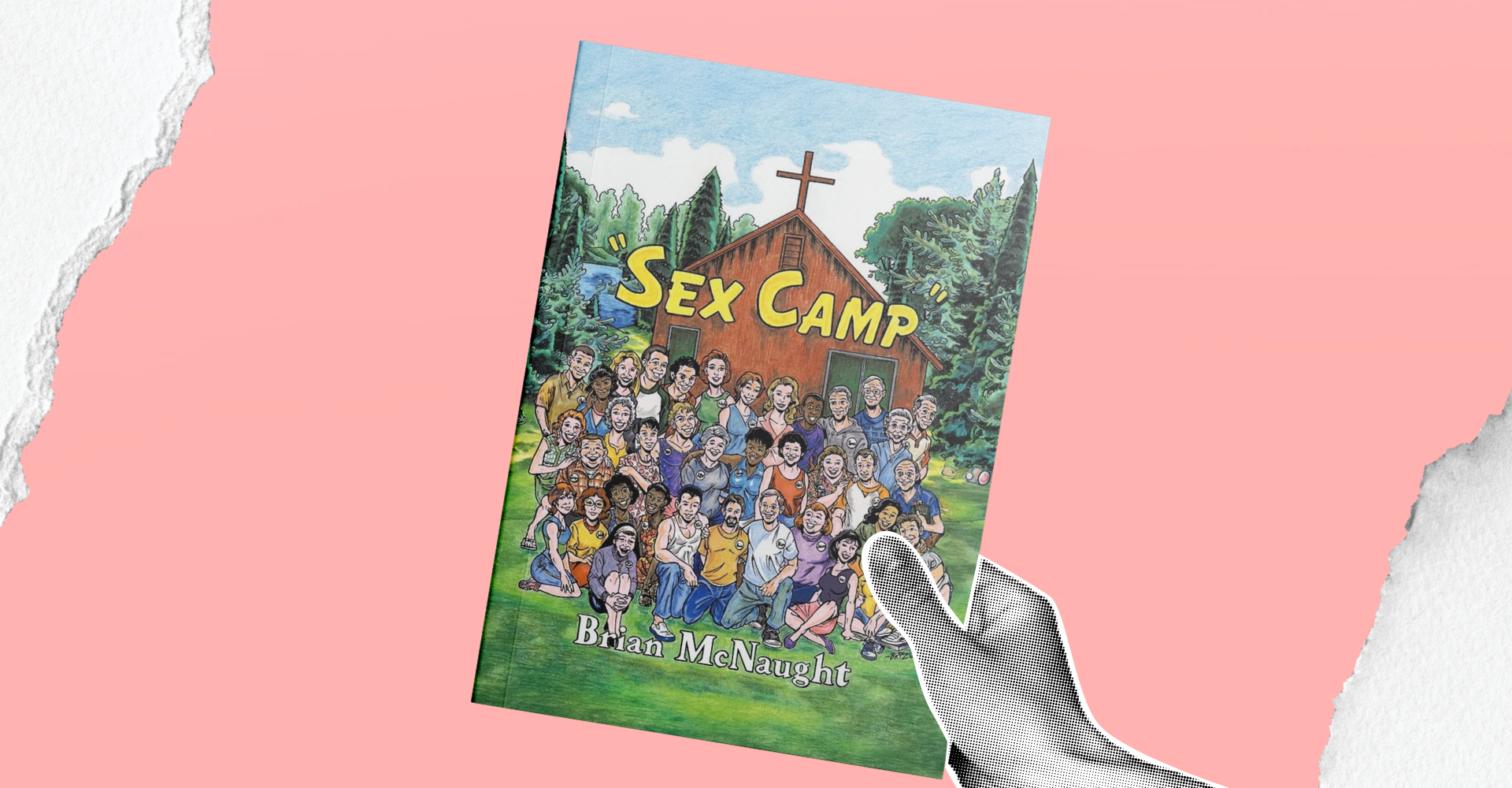
In the US, sex therapy certification training begins with the Sexual Attitude Reassessment (SAR.) I had the good fortune of attending an 8-day, (8:00AM-10PM each day) immersive residential SAR, situated in a picturesque summer camp site in upstate New York. Nowadays the SARS are more like two eight-hour days, often online. In our many daily SAR hours, we watched explicit videos depicting every imaginable and unimaginable sexual activity. After each one, we were divided into small process groups to discuss our feelings, thoughts and reactions. The idea was to examine our own predilections and prejudices, and even more to familiarize/desensitize ourselves and be prepared for whatever might come through our consulting room doors. I don’t remember much, a few visuals perhaps. And I remember the feeling: it was intense and I learned a ton. Most importantly, how ignorant I really was about the vast universe of sexuality. I was and am immensely grateful. One of our instructors wrote a book about it called Sex Camp (Authorhouse, 2005.) I still have my ragged copy.
I learned the word “squicked.” Which roughly means “ick factor”: something that seems gross or shocking. The intention of the SAR was to neutralize our squick, which even if we don’t say a word, communicates itself to a vulnerable client. I learned then that I had a lot more squick than I thought. I am glad I started learning about them then, and I can say I have come a very long way. Although I continue to be surprised and humbled by the squicks I discover that I still have…
Refugees
My unintended awakening to neglect trauma was as if I had stumbled across it. Once it grabbed my attention it did not let go and became an area of focus. It was as if something previously invisible had come to light. That experience also awakened me to how devastating it is to be and feel invisible, and how invisible I had always felt. I recently have had the experience of waking up to another invisible population, hidden within the invisible population of early neglect trauma: the world of BDSM, which can translate to bondage/discipline, dominance/submission, or sadism and masochism.) The most common reference, at least by insiders, is kink.
A formal definition is:
an umbrella term to address a wide range of atypical erotic or leisure interests, behaviors, practices, relationships and identities. Aspects include eroticizing intense sensations (including but not limited to “pain”), eroticizing power dynamics and differences, enduring fascination and arousal with specific sensorial stimuli including specific body parts or inanimate objects (“fetish”), role playing or dramatizing erotic scenarios, and activities that induce heightened or positive altered states of consciousness (Mains, 1984; Moser & Levitt, 1987; Moser & Kleinplatz, 2007; Ortmann & Sprott, 2013; Rehor, 2015).
Once I began to dip a toe into speaking of it out loud, a whole new-to-me population of clients and therapists began to approach me with awe and gratitude. I learned how marginalized and excluded they had felt, within our world that at least nominally strives to be inclusive, welcoming and affirming, and diverse.
I remembered how I had felt back at the SAR in 2000. I was stuck in my belief that BDSM must be a trauma re-enactment. I could not begin to fathom it as a positive, let alone healing activity. I did not understand it, remained critical, perhaps judgmental and ignorant, like much of our field (if that was not you, please forgive me. I did not hear anything to the contrary.) I even find as I now study that some of the experts in the sex therapy field who were my friends and even consultants, were experts even then, and I never asked. I somehow failed to ever talk about it.
I did try to make sense of it. I recognized that the neglect brain might be so numbed and deadened by the “inescapable shock situation” as to necessitate extremes of sensation simply to feel alive. And as an endurance athlete, I could identify with the exhilaration that comes from a long and grueling physical experience, and the sense of empowerment, control and euphoria that may accompany it. This I learn now, can explain it in part, but perhaps is only the beginning.
Recently, shaken awake by brave kinksters introducing themselves to me, I have set about educating myself further.
First I learned a new-to-me designation, replacing the “alphabet soup” (NO disrespect intended!!) of LGBTQIA+, which I have watched expand and lengthen over the years and decades, which I have come to adopt: GSRD, or Gender-Sexuality-Relationship-Diverse. I learned of it from one of the experts I encountered in my searches, Dominic Davies. He points out that in the LGBTQIA+ there is no letter to represent kink. One of his colleagues, Matt Wilson offers even another acronym: GBSK, which stands for Gender-Body-Sexuality-Kindship, declaring that the word Diversity contains within it a form of “othering.” I have remained with GSRD which appears to me, to require less explanation.
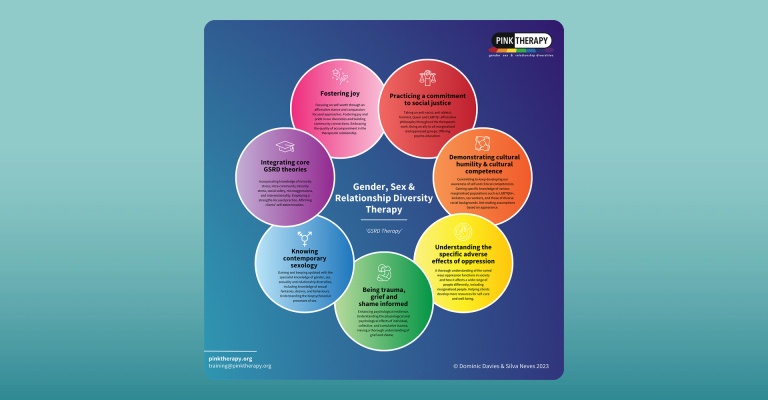
Dr. Davies has become one of my newer great teachers. He founded Pink Therapy in 1999, an organization providing information, training and community for GSRD therapists, clients and people like me who want to learn about this. I have learned the term “therapy refugee,” the unfortunate experience of too many GSRD clients who flee, often painfully, from therapy situations where they feel pathologized, judged, misunderstood, disrespected, or somehow rejected by their uninformed or misinformed, most likely well-meaning therapists. Granted, we all have the occasional client who leaves unhappy, hopefully not too often. This, however, is a more specific kind of flight. I know I don’t want to be the cause of it, or more of it.
minority STRESS
Pink Therapy is a great resource. There is a high level of sophistication in both clinical and research domains. I have had the privilege of consulting with top people: clinician/researcher Davies himself who is in the UK, and Richard Sprott, who is local to me. I am amazed by how modest, knowledgeable, generous sand kind they are. In my perhaps typical way, I feel a siren pull to learn more: talking to people who have contacted me and identified themselves as kinksters; binge watching Pink Therapy Conference recordings, and many other abundant offerings on many topics, on YouTube.
As I am delighted and gratified to see the trauma field encompassing more and more the social justice imperative, we hear the words “intersectionality,” where one individual may embody and bear the weight of multiple minority identities, or allostatic loads. Allostatic load is the cumulative effect of biological wear and tear on brain and body. Of course, those who are disempowered by more than one: being poor, and/or members of some rejected sexual, racial, ethnic, religious, ability age, body neurological or…what else? The more categories they fall into, the more they are suffering.
Another designation I am better learning the meaning of is “minority stress,” which can be experienced as an unending trauma state, worst of course for those living in a literal war zone or climate ravaged location, but others as well. I am finding the Pink Therapy gatherings, although I have not been to one in person, to be some of the most inclusive, truly diverse and even fun community spaces I have seen yet. I would not hesitate to refer a client to one of their clinicians or offerings.
I continue to champion the invisible to the best of my ability and widen my lens as much as I can.
I hope you’ll join me!