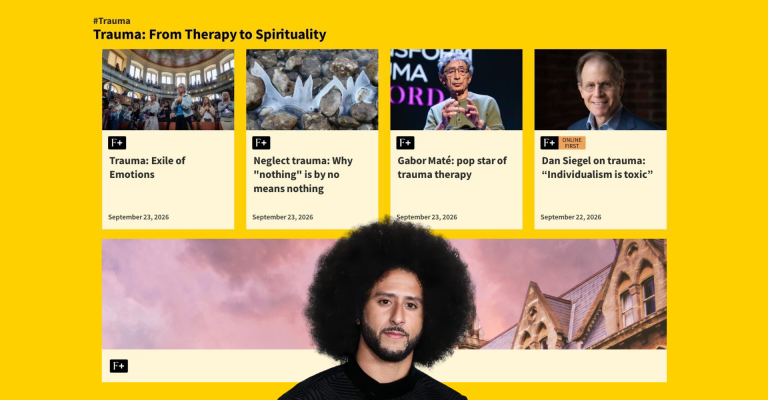
Just the other day, I was talking to a friend about iconic hero figures, of which admittedly I have more than a few. I happened to mention Colin Kapernick. To me Colin is a local treasure, and also in so many ways a symbol of painful neglect, especially in recent years. There has been no word of him for years – you may not even know who he is.
I am no fan of spectator sports, especially American football, but somehow, I married a man who is an ardent follower of the San Francisco team, the 49ers. Oddly, although I can (almost proudly) say I have never seen any fraction of a football game – well, I did stop by the TV once when the Rolling Stones performed in the Super Bowl halftime show – for some reason I have had a fascination with professional athletes, and I have read pretty much all the athlete memoirs and biographies that I could find. Waiting impatiently for years for Colin to write one, I preordered his memoir some six months ago, as soon as I heard about it.
As it happened, the very next morning after my conversation with my friend, on the front page of the local paper was an article about Colin. For those who are not familiar with him, Colin Kaepernick was the starting quarterback for the San Francisco 49ers from 2012, when he led the team to the Super Bowl, through 2014; and continued as quarterback less consistently as starter through 2016.
I am writing this on August 26, 2026. Yeasterday, Colin was awarded the Muhammad Ali Humanitarian of the Year Award for both his activism against racial injustice and organizing programs for underserved and marginalized communities. Beginning in 2016, he initiated protest, utilizing his platform as a major sports icon, by “taking a stand” against racism in 200+ years of US history, and in the sports world. Refusing to rise during the traditional playing of the national anthem at games, he initiated a movement to “take a knee” during the anthem, thus making a political statement against longstanding mistreatment of African Americans and marginalized others, which of course created quite a stir.
The personal cost to Colin for initiating this action, which caught on in some parts of the US football world, also kindled the ire of at least the “patriotic” powers that be, in the National Football League. Colin lost his position with the “Niners” as the team is affectionately called and was subsequently blackballed by the entire league. In these intervening years he has never been offered another NFL contract. This added up to a phenomenal financial loss, as quarterbacks, especially of major teams, earn in the multi-millions. Colin gave all of that up for his principles. But more than that, it was the loss of a lifelong personal dream. And much was to follow in the subsequent decade.
Colin dropped out of sight, certainly out of the public eye. The news selling focus of his activism, and the drama that followed, faded from public view or interest. Colin lapsed into invisibility, which as I was to find out, was an experience he was well acquainted with.
NUmber one
With my usual curiosity I searched for biographic history about Colin, wanting to know his story and what might have led to such valor and sacrifice. In 2021 a mediocre docudrama appeared on Netflix: Colin in Black and White; telling the story.
Colin was a mixed-race infant adopted more or less at birth by a white family. He embodied the stories both of adoption and being a brown-skin child growing up in a predominantly white world. Adoption is a big topic, and many adoptees identify strongly and directly with the neglect narrative when they learn about it. And it is also a complex issue, and one that I have endeavored to study, certainly not nearly enough. So, I make no pretext of being any kind of expert on that, and I am always curious and eager to learn.
Clearly, as we know affiliation or feeling a part of something whether it be family, community or some version of identification with a social group, is a neglect issue, and many adoptees identify strongly with that. So, for Colin, being not only adopted, but adopted into a world where he did not look like his family, or most of the people around him, was central to his sense of disenfranchisement.
I am not much of a movie watcher, always being partial to books, but there was one scene that has stayed with me. Colin recounts the story of his adoption. His parents were prepared and had contracted to adopt a baby girl, and when they arrived at the adoption agency to pick up their newborn, they were told that for some reason she was “no longer available.” The reaction of the parents was not portrayed in the film, but the agency offered them another newborn: Colin. His words in the film that struck me so hard were, “Right from the very start, I have never been anyone’s Number One.”
Colin found his place in interpersonal life, by being an extraordinarily gifted athlete, which carries significant weight in this country. He excelled in all the sports, standing out particularly in both baseball and football. In the US, the road to a career in professional sports, has traditionally begun with playing on a college team, so colleges start sending out talent scouts to recruit winning athletes in their final years of high school. Colin was sought after in both baseball and football. And although he received a number of attractive baseball scholarship offers, his ultimate dream had always been to play professional football as quarterback. It was “all he ever wanted,” and he trained doggedly, (as he actually still does.)
Passing up a number of good baseball offers, Colin held out for his dream, which ultimately did come to fruition. Knowing all this background, made Colin’s activism and his sacrifice, all the more meaningful to me. As did his glaring invisibility these eventful intervening years. Powerfully attuned to invisibility, I with a dogged persistence that perhaps matched his, watched the news for any news of him. When I read that he had founded a publishing company which put out their first book, I found it to be a collection of essays by various authors about anti-racism, which although important, disappointed me as it was not about him. I wanted to know about him.
dreams
Meanwhile, we saw the march of history in this country, with a series of police murders of young African American men, the headlines seemed relentless, culminating in the dramatic murder of George Floyd in 2024. Colin’s sacrifice was largely forgotten, and was it all for nought? One of the advantages of being as old as I am, is that I have watched the cycles of history, and how what seem like major gains, and then seem to recede or swing back the other way, not unlike the vicissitudes of healing from trauma and neglect. We saw Michael Brown, Trevon Martin, Eric Garner and then George Floyd in 2020. It is easy to look out and ask, have we learned anything at all? Except the zigs and zags of history that I have witnessed in my long life, show some forward motion, in this ongoing task of healing the fragmented self of this nation, to borrow Janina Fisher’s eloquent language about trauma work.
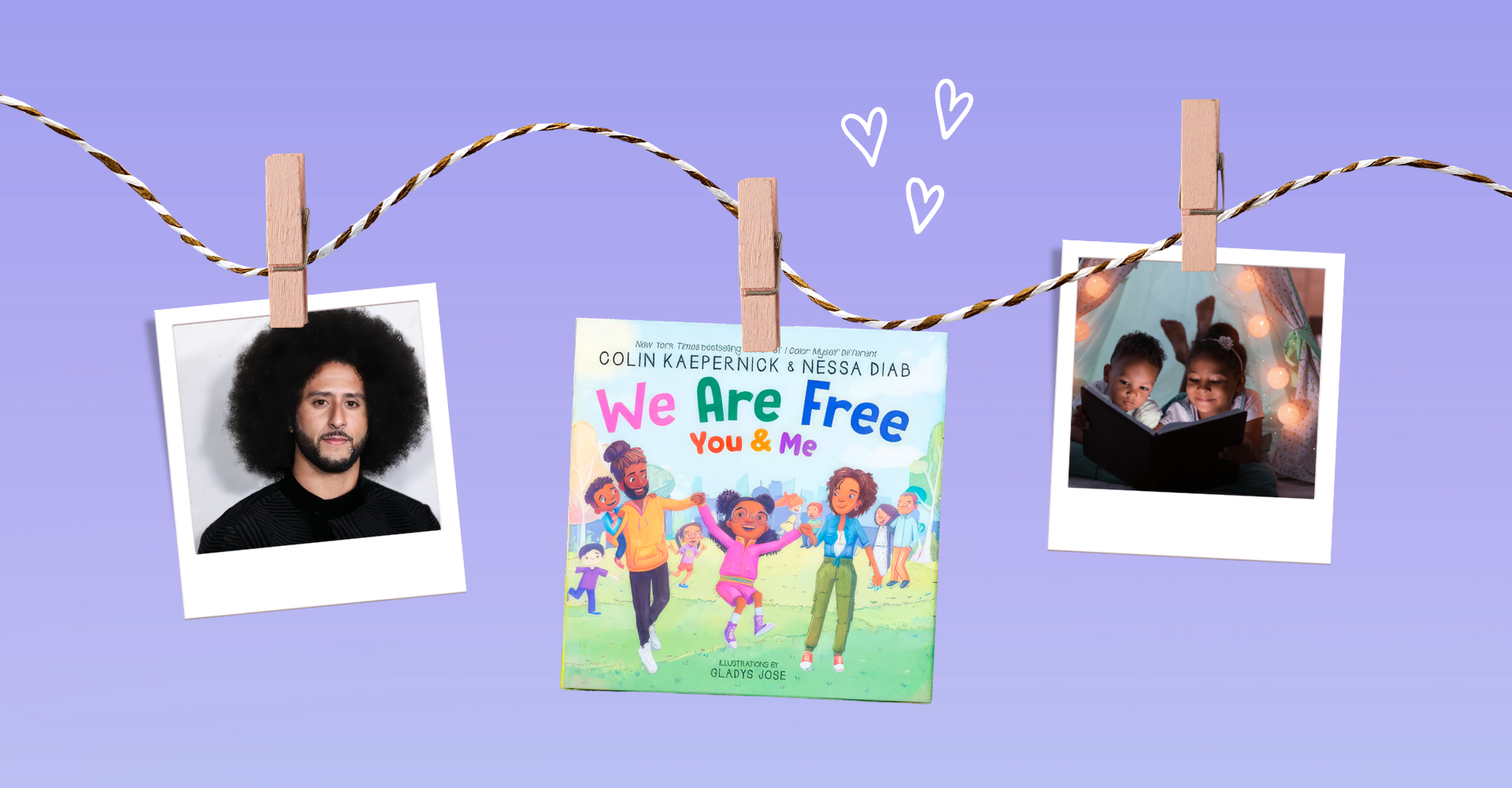
I eventually found bits and pieces of news about Colin. Pheonix-like he found his way again. He partnered and had a child, a little girl now two. With his partner he authored children’s books about race and inclusion, founded “Know Your Rights” camps in underserved communities, penned a memoir: The Perilous Fight, which comes out next month, and won the prestigious aforementioned award, and essentially reconstituted himself yet again. Colin landed on his feet again. I eagerly await the book.
In a recent YouTube interview, Colin told the interviewer that he still trains every day. He still harbors that long held dream to be a quarterback. May be approach all our healing social and individual with such tenacity.
Memory is so mysterious, as I write this, I had a flash memory of a poem I read in junior high school by Langston Hughes. Amazing how the words might languish unremembered for years, and then suddenly pop to mind. The poem, “Hold Fast to Dreams,” ends with the assertion, if we let dreams go, “life is a barren field, frozen with snow.”