
One of my few childhood memories is from when I was probably not quite three years old. We were on some sort of family outing, walking through a park in New York. We reached a spot where the path led to a green area. I took a closer look at what had initially appeared to be a bright spring carpet of fresh grass, and I saw that the whole patch was moving, swirling around like some kind of optical illusion. I bent down and looked a little more closely, and shrieked. It was not fresh spring grass as I had initially thought, but an undulating mass, a crowd of creepy crawly bright green caterpillars, squiggling all over each other. I was horrified, and terrified, realizing I could not take a step in my little Sunday shoes without squashing them. I am sure my older sister was there somewhere. I have no idea how she felt about them. I have never thought to ask her. She was always a little bolder and wilder than me. What I do remember is screaming, “Daddy, carry me!” I guess he must have, but I don’t remember. The scene goes dark, leaving behind only a creepy, slimy feeling about the multitude of little squirming creatures.
Fast forward about 50 years to 2017. My older sister, yes, the very same, had stage four ovarian cancer. For two years, I precariously hovered in a delicate balance between fierce and tenacious hope alternating with immobilizing fear and grief. All I could do was bake bread, and be with her. I changed my whole schedule, and we probably spent more quality time together, including in the chemo room, than we had spent together since we were kids.
My sister has a beautiful garden and yard. She and her husband not only have a paradise of flowers, vegetables and fruit growing and thriving out there, but they draw a wealth of all kinds of birds. We would sit out there together, and watch the birds. There was a whirring of hummingbirds, and I learned about the white-tailed kites who when they partner, the pair spends the season flying together as they build and prepare their family home. In my sister’s garden was a couple that visited often, we would watch their graceful pas de deux. They seemed to be building a nest in the peach tree. It seems now a blessedly long time ago. Seemingly miraculously my sister pulled through. She got well and before too long had a wild head of hair again. She is still going strong, although admittedly I can never forget those two long years of the pain of hovering in the in between.
Hope
One the most devastating sequelae of neglect trauma, is the loss of hope. Many therapists and loved ones, or survivors themselves might be disheartened and even impatient or judgmental about what seems like a reflexive pessimism or hopelessness, criticizing them for being a downer, or having a “negative attitude.” Perhaps however, they truly cannot help it. The core of neglect trauma is loss, in one or another of its iterations: the caregiver fails to be present whether it be a function of distraction, dissociation, preoccupation, abandonment, death or simple absence in the first place, the earliest infant experience is life-threatening terror. The source of their very survival is gone. Lacking the brain development to make coherent meaning, only the emotion, sensation, somatic experience, the implicit memory is logged. In the future, plagued by activations, they may very well not “know” what sets off the cascade of dread. Only that the world becomes charged with dangerous uncertainty, the unknown is unlikely to hold anything good. Paired with an accompanying sense of helplessness, it is not surprising that proceeding with suspicion, vigilance and low expectations of others, would become a ready default. It does make sense, however unsavory and tiring it might be. I understand it to be part of the neglect informed therapist’s job description to be a willing and able carrier of hope.
Succeed at Last
Increasingly over the last few years, I have heard more and more about the majestic monarch butterfly being endangered. I love symbols of transformation of all kinds. After all, transformation is all of what this dramatic endeavor of healing from trauma and neglect is about: literally becoming a person out of the unformed mass we seem to have been before. I love the image and the idea of spinning a chrysalis, inhabiting it for a time, and emerging a glorious and beautiful creature that can then fly free. The idea that the monarch might be disappearing from the planet was a sad one indeed.
My sister and her husband intentionally made their garden a refuge and then a breeding ground for monarchs. They planted milkweed, which is what the caterpillars love most to eat, and as in the vintage baseball movie, the caterpillars came. They began to proliferate and then there was a flurry of flapping orange and black in the very garden where my sister and I had sat and hoped and nourished her transformation. It was beautiful.
It has now gotten to where when we go out to dinner, my sister shows the grandma pictures in her phone, while her husband’s phone is filled with dramatic green and squirmy shots of various developmental stages of caterpillars. I have had to “update my files” from the terrifying slithering creatures of my memory, to a generative and essential part of the transformation process. The ugliness is indeed a part of the transformation. Admittedly, I prefer the butterfly or baby pictures over dinner, but it is a wonderful continuation of the transformation that unfolded out in that yard. And I understand that the monarchs are doing better out there in the larger world. In 2024 they advanced from endangered to “threatened.” Better, but we are not there yet, their transformation is incomplete. Meanwhile, they continue to be a powerful symbol of transformation.
I recently heard a lovely program on BBC (https://www.bbc.com/audio/play/w3ct6wht) which featured three stories about monarch butterflies; all three beginning with loss, that was transformed into something new. One was the story of a woman who lost her mother to cancer, far too soon. Her mother had been a prolific gardener and the two had spent some of their most precious time together working in and enjoying her mother’s copious herb garden, often accompanied by a gaggle of monarch butterflies. As the beloved mother was dying, she consoled her daughter, “whenever you see a monarch, it will be me, reminding you of my love for you.” Sometime later, as young woman was working through her grief, her overzealous young cat somehow swiped the chrysalis of an emerging monarch, resulting in a tragically torn wing. Of course, especially in light of her mother’s dying words, the young woman was again bereft. But somehow, she found the inspiration to undertake a delicate surgery, and with an embroidery needle, contact glue and tiny tweezers, she repaired the rupture. At the end of the story, the healed, transformed butterfly disappears in the spring sky.
The second story was of a woman, this one with early father loss. After a lonely early childhood, the abandoning, alcoholic father she had never known, reappeared when she was 13. That was when she first met him, and her experience of him was an angry, erratic and abusive man. Much later after his death, she learned he was an accomplished naturalist who even had a butterfly species named after him, a discovery that inspired her subsequent and exquisitely satisfying career in photography.
The third story was about a young man, also a photographer, who in the throes of a serious cancer, developed an elaborate methodology for photographing butterflies in flight. No small feat, and another powerful transformation.
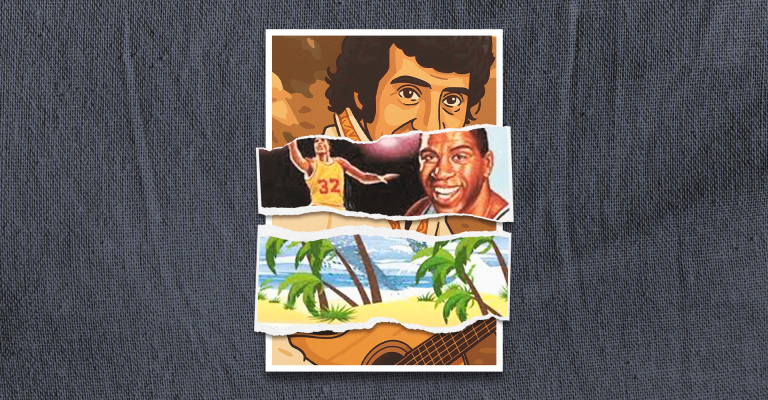
I was going to make these three stories, the essence of this week’s blog, this my final blog of 2025, until I was startled to hear that Jimmy Cliff had died at the age of 81. I always loved him. Once again, I take loss very hard. I was terribly sad, replaying some of my old favorites.
Scratching the surface of Cliff’s life, I learned that he had plenty of trauma and loss. Born in Jamaica, the eighth of nine children. Soon after his birth, a major Jamaican storm, not unlike the one that recently swept through Jamaica, blew away his childhood home. His family escaped, but his single mother from what I could piece together, was most likely overwhelmed. By the age of 13, young Jimmy ventured off to the “big city” on his own and was pretty much independent and from then on, and began playing music. His transformation was dramatic. He became a world phenomenon, introducing reggae to the whole world. He won accolades and awards, and brought much liveliness and joy to all of us, certainly to me.
At this time, when there are so many raging storms, torn wings, disease and loss, we must “…try and try, try and try. We’ll succeed at last.”