
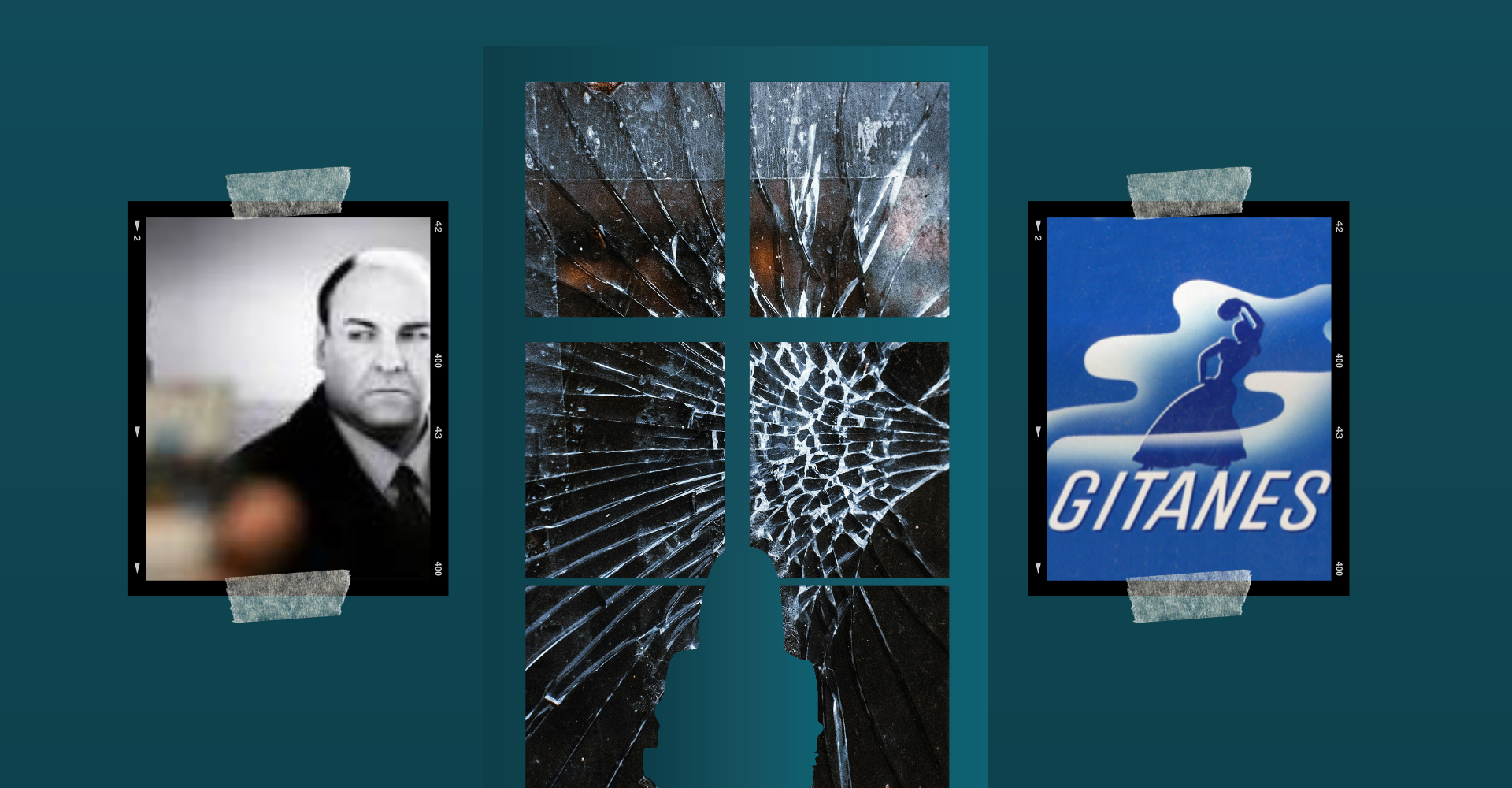
My first real love was a “bad-ass.” He was, wildly good-looking, European and chain-smoked “Gitanes” which were very strong, unfiltered cigarettes. When he moved out of the apartment we shared for 10 years, the previously white walls were grayish black, and it took a while for even fresh paint to extinguish the smell. He was an athlete, could have been a really good serious one if not for the smoking and drinking. But he was irreverent and tough. And I loved that. Like many a child of neglect, I craved a protector: someone who would fight if necessary, on my behalf. In my family that was unimaginable. First of all, because I barely existed. But secondly because it was, at least allegedly, “not our nature.” My father would at times bellow, “He’s just a louse! They are just lice!” But it was in reaction to someone slighting him, certainly not me. I don’t think I even realized that I was drawn to men who were somewhat mean, but protective. Mean on my behalf. Except perhaps, various iterations of Mick Jagger.
Not much of a television person, there was one program that I did love and watched religiously. I would record it for my friend on the old VHS because his TV did not get the channel it was on. It was Sopranos, which ran from 1999-2007. When that show went off the air, I turned off the TV and have never turned it on again. The main character, Tony, was a gangster: boss of an organized crime mob. What made Tony so compelling for me, was that he was in therapy, nominally for panic attacks. So clearly there was some conflict about “whacking,” essentially eliminating anyone who interfered with his agenda, and perhaps his misogyny and mistreatment of his wife.
My favorite scene of the whole 8 years was after his therapist, whom Tony was quite attached to, had been brutally raped in the parking structure of her therapy office building. She was understandably shaken, and massively traumatized by the assault, and her husband was painfully unresponsive and minimizing, which compounded her trauma. Much like the all too common sexually abused child who tries to tell someone and winds up blamed or further abandoned. This experience is often as traumatic as the actual event, or even more so, compounding the shock with betrayal. Especially if there is a prior history of abandonment and neglect.
The most poignant scene in that episode, is in Tony’s session. The therapist has returned following a brief hiatus after the rape. She of course had not told her patients what had happened to her. And you see her in the session, struggling with herself. She knows who the rapist was, and she knows that Tony would be that longed for bad-ass protector that like me, she had never had. That guy would have been a “mark,” Tony would have had his head in a bowling ball bag at the bottom of the ocean, in a hot minute. She knew that.
The therapist did not say anything, but that inner struggle of hers powerfully evoked the deep longing I had always had, for someone to have my back in that way. Instead, everything was “my fault.” For survivors of neglect, that longing and the blame, are anything but unique.
It continues to amaze me, the mysteries of memory: what sticks and what evaporates, simply fading away like smoke. Among the literally hundreds of books I have read, some leave a lasting mark – even the author’s name. Probably when they strike a historic an important personal chord. One of those was George Lakoff’ 2008 book The Political Mind. Lakoff was a linguistics professor at UC Berkeley. I have no idea what prompted me or even led me to a linguistics book, except perhaps that the mind and politics are both core passions of mine.
Lakoff’s theory about how it is that we end up choosing and following autocratic, powerful leaders, is because of how many of us have wished and longed for a protector who would stand up and fight on our behalf, who would insist: ”Leave my kid alone or I will destroy you!” Or, “My kid is the BEST! Don’t mess with my kid! Or else!” I don’t mean this literally of course, but how many of us have had a fantasy or wish that I might matter so much, that someone would actually go to the mat for me. Looking around at the world today, I wonder, does neglect, and the gaping void of anything even vaguely resembling protection, create a vulnerability or a gravitation toward charismatic, autocratic, powerful “spiritual” or religious “influences” or political leaders? Certainly, it is not conscious. But I am curious about this.
Maximum security
Another of my lingering literary memories was of a book by someone I heard speak at the Boston Trauma Conference, probably in the late 1990’s: James Gilligan. I have not seen or heard much from him since, although according to AI, he is still teaching, now at New York University, and still writing. His book, Violence: A National Epidemic was first published in 1996. It was probably around that time that I heard him in Boston. A truly remarkable human being, Gilligan worked with the most viciously violent convicted maximum-security criminals, and the “criminally insane,” in prison hospitals. These are individuals who have committed some of the most unimaginably heinous, brutally gory crimes. It amazes me that Gilligan has the courage, and the heart, let alone the interest, to be locked in with these men. He has some extremely valuable things to teach us, some of which are painfully related to our themes of trauma and neglect.
Because they feel so empty, so numb, so utterly dead, these men seek for something to feel a spark, to feel alive. I see it to a much lesser degree with some of my neglect survivor clients; what I have come to call “hand grenades,” provocative, often self-sabotaging but dramatic verbalizations or actions to awaken something, anything at all, to interrupt the excruciating boredom, the activating stimulus of nothing. It could be rousing a political argument at a family holiday meal, an enraging comment tossed out off-handedly in a couples’ session, even an insult to the therapist: anything might be better than nothing.
Gilligan adds that often the prisoners do unthinkable things to themselves, inflicting dramatic, even life-threatening injury and pain to their own bodies: as vicious as the crimes that landed them there. To many, literal death seems preferable to the seemingly endless living death they are enduring. It sounds frighteningly like the agony of disconnection, and agonizing emptiness of neglect trauma.
Injustice
Much of my life, I was painfully aware of who “got” what, and how much; most significantly with attention and affection, but everything really: a running tally of comparison. Of course, I anticipated and expected to come up short. Neglect is a universe of scarcity. There is categorically not enough to go around.
Says Gilligan, the extreme of violence correlates much less to actual poverty, than to relative poverty. The wider the disparity between “haves” and “have-nots,” the higher the incidence of violence. He cites that during the Great Depression of the 1930’s, when virtually everyone had nothing, the level of violence in the US was lower than ever, significantly lower in the US than in times, perhaps like now, when the gap is widening. His explanation for violence is it is a way to restore justice, to avenge violence suffered, and to alleviate shame. Being or having less, inspires shame and envy, which can readily inflame a vengeful rage, and a righteous urgency to reclaim what is rightfully “mine.”
Injustice, scarcity, shame, and the agony of nothing, are painfully familiar to us as we delve more and more deeply into the study of neglect trauma. I am ever chillingly reminded of the insidious feed-back loops that stimulate and perpetuate the violence that traumatizes and perpetuates more trauma and neglect and on and on and on. Again, my redundant rallying cry, we must work together to heal both: developmental dysregulation, and the out of balance larger world.
I Hope to see you in Boston!