
Berkeley author Michael Chabon’s touching memoir, Manhood for Amateurs, begins with his declaration that his story started with the birth of his brother when he was five years old, saying: “Before that, I had no one to tell it to.” With no “other,” existence itself is questionable, which is why neglect is so very lethal. I recently heard a remarkable story underscoring this, of writer and conservationist Hannah Bourne-Taylor.
Although we don’t learn much about Bourne-Taylor’s childhood, we know that her family “moved often.” It certainly sounds bereft of attention, like a vacuum of solitary neglect. She describes herself as “bird-obsessed,” and every spring when her favorite birds, the swifts, returned to her area in the UK, she was overjoyed as if returning to life.
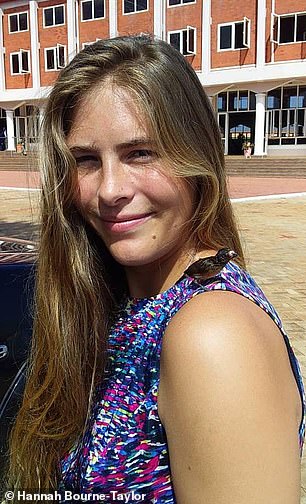
Bourne-Taylor did not even realize how agonizing her daily experience of OCD was. It was certainly the most debilitating case I have ever heard of, and I am no stranger to OCD. Not only was she plagued by the diagnostic, endless bouts of checking and re-checking, but she “en-souled” the objects of her checking – that is, she imbued them with a “soul.” When she rearranged a can of beans that was crookedly misaligned from the other cans, she imagined the can was suffering from being out of sync with the rest of the clan. Her most severely consuming preoccupation was when she and her husband moved into a home in the far reaches of the jungle, which had a lovely swimming pool. The first time she went to take a dip, she became aware of ants falling into the pool. “Making eye contact” with the ants put her profoundly in touch with their emotional experience, and she became obsessed with saving them from their terrifying drowning deaths. She did not want the luxury of her swim to be at the cost of their fragile lives. Not only did she build bridges of palm fronds to enable their safe rescue, but she got up repeatedly during the night to make sure they were OK. The ants occupied virtually all of her waking life. And it was a secret and solitary world. She did not even tell her husband, who was to be the first person she ever told of her OCD, until she was 31.
Although we don’t learn much about Bourne-Taylor’s childhood, we know that her family “moved often.” It certainly sounds bereft of attention, like a vacuum of solitary neglect. She describes herself as “bird-obsessed,” and every spring when her favorite birds, the swifts, returned to her area in the UK, she was overjoyed as if returning to life. As the wife of a devoted bird lover with a history of extreme neglect, it is not hard for me to imagine her primary relationships being aviary.
When Bourne-Taylor was in her early thirties, her husband (ironically named Robin!) got a job assignment in the far reaches of Ghana. They relocated, and it was then that she seemed to decline deeply, sinking into her most paralyzing depression. That is when the preoccupation with the suffering ants descended on her, consuming most of 24 hours a day. Until she met the finch.
Of course, it is my rallying cry that attachment, or lack thereof, is the source of both the most profound of injury and most profound healing. And although I have known many a survivor of trauma and/or neglect whose first perhaps only safe attachment was their own child, and plenty also whose preferred attachments are to animals rather than humans, I have never heard a healing story quite like that of Bourne-Taylor.

Finches are tiny birds, perhaps the height of Bourne-Taylor’s little finger. They are extremely reliant on the flock, being so small that when left to themselves, they are easy prey for any hungry carnivore. She describes them as “a flying snack” that will last barely minutes. The proverbial birds of a feather protectively flock together and have an elaborate communication/alarm system. The finch that Bourne-Taylor encountered was somehow lost or separated from the flock. Bourne-Taylor, knowing that was a likely death sentence for the little guy, worried desperately about him for the next 10 hours or so, checking on him repeatedly.
Ultimately she decided she better take some action. She attempted to imitate his chirp, and he chirped in reply, ultimately coming to her. What ensued was a remarkable love story that saved them both. The interested can look for her book, Fledgeling, in which she chronicles the whole thing. The little bird ends up making a nest in her waist-length hair, and for the next 84 days, until he is mature enough to be released into the wild, they spend 24/7 together, making a total of over 2,000 hours.
Bourne-Taylor never named the bird, her mission always being not to make him a “pet” but to return him to his natural habitat. When it was time to let him go, she enlisted her husband to do the “deed,” knowing she would find it unbearable. She also feared that he would not “make it” somehow, that a predator would get to him too fast. And it was a bittersweet time, of triumph and deep grief, when they parted.
Both Bourne-Taylor and the little finch were inalterably changed. What she discovered was that her OCD symptoms were gone. She concluded that the unrelenting preoccupation with care for her little buddy kept her so riveted in the present moment, it was like a compelling mindfulness practice that must have changed her brain. Her OCD did not return. She has since become an avid and prolific conservationist and author.

Of course, it is my rallying cry that attachment, or lack thereof, is the source of both the most profound of injury and most profound healing. And although I have known many a survivor of trauma and/or neglect whose first perhaps only safe attachment was their own child, and plenty also whose preferred attachments are to animals rather than humans, I have never heard a healing story quite like that of Bourne-Taylor. Again, I do not know her trauma story, but nonetheless, the little finch was as successful as any therapist I have ever seen.
It is a hard sell for survivors that relationships can be anything healing, especially as they have ever been so fraught, dangerous, and ambiguous at best. But I do know that as effective as any of the exquisitely helpful and essential modalities for trauma healing are: somatic therapies, EMDR, Neurofeedback, psychedelics, none are sufficient without the healing of the attachment wound: attachment with a sentient other. For survivors of neglect, even coming to truly believe that is a challenge and a main task of healing. It is a default to imagine it is impossible or just not worth it. I have also seen that when a client somehow breaks through to buying in, their healing takes off. A good therapist, as I like to say, is necessary and insufficient, meaning that talk therapy is not enough, but it is essential. My two cents, and I would not take you anywhere I haven’t been!
Bourne-Taylor never had the luxury to find out about the rest of the story about her beloved little finch. In a way, he was like “the one who got away.” Similarly, I often never find out what became of clients I had that I cared about a lot, and then under whatever circumstances, they flew from the nest. They might not even imagine how much I had cared, just as I could not imagine that my therapist cared about me. It was her “job,” so why would she think of me when I was not in her sight? Neglect teaches us to imagine that even when we are in view, we barely exist in the mind of the other, if at all. Bourne-Taylor reminds us that the healing bond works in both directions, which is one reason why couple’s therapy is so profound. And although a good therapist does not rely on or “use” their client for their own ends, it is an undeniable privilege to be in such an intimate and essential role. Like Bourne-Taylor, it is bittersweet when people are truly ready to fly on. I like to reassure them that when they do, the door is open should they wish to return for a single visit, a stint, or even another run together. It doesn’t happen that often, which is fine. And I don’t stop watching the horizon for a little flutter of wings.
Today’s song:
My book “Working with the Developmental Trauma of Childhood Neglect: Using Psychotherapy and Attachment Theory Techniques in Clinical Practice” was published on August 31st. It provides psychotherapists with a multidimensional view of childhood neglect and a practical roadmap for facilitating survivors’ healing.
From an early age, I harbored both fascination and perhaps preoccupation with the body. Certainly my own, but really everyone’s. I was curious about sex, obsessed about food and weight, athletics, healing, all of it. I did not think I was smart enough to be a doctor, but I thought about it. In graduate school, I chose a specialization in somatics, even though back then, somatic psychotherapy did not have nearly the foundation of science and neuroscience it has now. I pored over Wilhelm Reich’s Function of the Orgasm because it integrated the essential worlds of psychology, sexuality, and politics in a way that profoundly resonated with me, those being three areas of exploration that consumed me and still do. I am gratified that the body has come to occupy center stage in the field of trauma, and even in a weird way, how the pandemic has forced us all to be mindful of the body and of health. It has also illustrated how profoundly matters of the body affect our mental health and even vice versa and worldwide.
Admittedly, I neglected the vast population of disabled or “differently abled” people. I don’t know if out of fear, denial, or simply oblivion. Another population that is invisible and forgotten, abandoned or cast out. I remember telling my husband early in our relationship, “if ever I can’t move, please shoot me.” I simply could not imagine being able to live if not fully “able-bodied.” (I am ashamed to remember it.) Our office has an elevator and a “disabled” parking space. I figured I was “doing my share.” Oy vey.
I recently heard an interview with a young woman introduced as a blind, queer, African American hip hop artist, Young Ant. She was talking about disability in the music industry, and what it is like to be a blind performer – something I had never thought about. Watching her rap and dance on YouTube was eye-opening. I had never considered how a performer finds their way gracefully onstage, dances, and looks cool moving, not to mention the accessibility issues of most or certainly many venues. Ant is on a mission to awaken the world to this.
I was impressed by the recently released movie, Box of Rain, a movie not about the Grateful Dead, but about the culture of Dead Heads, by the mention that way back in the 1970s, the Dead had a little platform in the audience at their shows for wheelchairs. That was radical in its time: the same era in which then-President Nixon killed what would have been the Americans with Disabilities Act. Many species destroy or abandon their “imperfect” young, and sadly, many human parents and fellow citizens are not much better. I am humbled to find another “blind spot” in my awareness, another big point of neglect and injustice.
A man featured in Box of Rain, a longtime Dead Head, was Jim LeBrecht, who worked as the sound engineer for the Dead for many years. He is also a longtime friend of my best friend. Of course, I was excited to tell her about seeing Jim in this new movie. She asked me if I had ever seen another movie he had produced, Crip Camp, about a summer camp in the Catskill mountains of New York, specifically for disabled kids. I was intrigued.
Rarely have I seen a more moving and graphic depiction of the power of affiliation, what it is like to be in a group of others with a similar experience to one’s own. In the world of trauma and neglect, we are well aware of the power of the group: what it is like to be in the company of others with some sort of similar experience who understand without any words. Some of us have had the good fortune to have been in such a group and found it indescribable. I am not much of a movie person, as I always say, “I am way too stingy with my reading time,” but this one is a must-see (and it is available on Netflix).
The film also makes a powerful point of how (yes, we ever return to it) the original attachment with primary caregivers so profoundly affects the sense of self. The film opens with Jim narrating,
“When I was born,” he says, “they did not expect me to live more than a couple of hours.” In the visual footage, a grainy old black and white home movie, we see little Jimmy as a toddler, blissfully happy, laughing and ambling, climbing and tumbling on his plump little arms. Although we do not see his parents, it appears that he feels secure and safe enough to explore widely, move and grow, even to become the teenager who has the gumption and grit to imagine and aspire, hope, and actually become the sound engineer for his favorite band. And those parents obviously got him to Camp Jened, lovingly referred to as “Crip Camp.”
At camp, everyone had one or another disability, and for the first time ever, felt free and accepted. They did what all kids do at summer camp: sports, art, music, experiencing nature and the outdoors, and communal living. With a culture of non-judgment and helpfulness, they pushed each other’s wheelchairs, carried those that needed it, and understood each other’s sometimes strained or challenged speech.
In the larger world, apparently, there is a definite hierarchy or pecking order of disabilities, with the “Polios” at the top rung and the “CP’s” (those with cerebral palsy) at the bottom. Not here. It was moving to see how carefully and thoughtfully the “CP’s” difficult verbalizations were both listened to and comprehended, sometimes “translated” or summarized by a comrade. And my memory was jogged.
I remembered a time, the one time in my long and sweaty waitressing career, that I waited on a really famous person. I worked in a fancy place not far from UC Berkeley and had the honor of serving a large dinner party celebrating the luminary physicist, Stephen Hawking. I watched the tiny man in his wheelchair, fitted out with many super-high-tech devices to help him communicate with the throng of scientists and other intellectuals fawning over him, myself included. What a rarity in today’s “ability-supremacist” world.
My favorite part of Crip Camp was when a “CP” named Judy laughingly told the story, in her somewhat garbled speech, “I was getting older, and I did not want to die a virgin! With a twinkle she declared, “So I had an affair with the bus driver! A week or so later, I had a terrible abdominal pain. I went to the doctor and turned up a diagnosis of gonorrhea. The doctor was flabbergasted, incredulous! He could not imagine that anyone would want to f— me! As soon as I got well, I went back to school and got a master’s degree to become a sexuality educator.” Judy became an activist and vocally championed the cause of disabled sexuality. She also married happily, although she laughingly added, “my in-laws accepted me, but they said to their son, ‘couldn’t you have at least married a ‘Polio?’”

Admittedly, I neglected the vast population of disabled or “differently abled” people. I don’t know if out of fear, denial, or simply oblivion. Another population that is invisible and forgotten, abandoned or cast out.
Our dad, when he had throat cancer, required a complicated surgery where they had to break his jaw and build a new one, out of steel. Always vain and proud of his strapping good looks, he was now disfigured. He was 50. Amazingly it did not seem to phase him (the insulation of narcissism?). Years later, I even asked him about that. He said it never bothered him. By then, he was fond of saying, much like Keith Richard, “I’m happy to be here! I’m happy to be anywhere!”
I once had a client who finally accepted his history and the idea of being a survivor of childhood neglect. He said, “I want a disabled placard for my car that says “Child of Neglect!” It is a blessing and a daily challenge to accept who we are.
Have a look at Young Ant rapping and dancing with her white cane. And thanks Jim!
Today’s Song:
My book “Working with the Developmental Trauma of Childhood Neglect: Using Psychotherapy and Attachment Theory Techniques in Clinical Practice” was published on August 31st. It provides psychotherapists with a multidimensional view of childhood neglect and a practical roadmap for facilitating survivors’ healing.
Way back at the beginning of our relationship, I remember my husband saying to me, only very slightly in jest, that there are really only three important activities to do on vacation: “eat, sleep and make love.” At the time, now over thirty years and many vacations ago, that was actually a terrifying prospect. Not only due to the apprehension of two old survivors of trauma and neglect spending 24 hours a day in the presence of another human but because all three of those activities were quite fraught and certainly not easy or fun for me.
It took a long time for us to find our way and create vacations together that “work” (play? Relax? Whatever!) It seems as if I am writing this about two strange other people, thankfully, as we wrap up a glorious week in Hawaii, USA.
My last few blog posts have been dark and pretty serious. This week, being largely unplugged and reading only the lite version of the San Francisco local paper – the weather, horoscope, food, and books sections – I thought would be a good time to lighten things up and write optimistically about sex. We may all be weary and beleaguered by recent coverage of the topic: abortion, harassment, assault and other abuse and discrimination, so I thought I would flip it and talk about a fave subject of mine: Sexual Health.
In the neglect household, things, for the most part, don’t get talked about at all, and there is no one to ask questions to about much of anything. So when kids experience changing bodies at puberty, “discover” masturbation or notice the differences between their own and siblings or other kids’ bodies, they may be confused, even scared. What might be an area of wonder and expansiveness becomes a shadowy, enclosed secret. Add to that childhood sexual abuse and all the secrecy, dysregulation and emotions that come with that, and we have a child locked in frightening and silent tabu. When I started menstruating at age 9, I did not know what that was. Aghast that something was fatally “wrong” with me, I was also horrified and ashamed of the mess, smells, and evidence. I remember being at school and being terrified to get out of my little desk and leaving a bloody puddle on the chair. And I was afraid of getting caught throwing my little undies in the trash. I don’t remember how my older sister somehow found out and helped me out of that quandary.
The larger world, sadly, is not much better. Although we are bombarded with sexual imagery, innuendo and titillation, there is a poverty of information or, certainly, information that is accurate and useful. Rather sex is commercialized, commodified, sensationalized and distorted by truly impossible role models of bodies, relationships, and functions: instantly rock hard ever-lasting erections, always feverishly wet vulvas, chandelier swinging, explosive simultaneous orgasms – at least in heterosexual couples.
And because there is no safe and reliable education to be had, kids (and adults too) get their “information” and advice from movies, porn, locker rooms and of course, Google and chat rooms of every stripe. And with sex being wildly subjective and colored by culture, values, morals, and individual and mass conscious and unconscious biases, the silent resounding question remains, “What’s ‘true’?”And for the most part, no one knows that everyone else is asking the same thing. Oy vey!
An interesting book I read maybe 20 years ago has stood the test of time even in the book-cluttered recesses of my head: When Sex Goes to School: Warring Views on Sex–and Sex Education–Since the Sixties, by Kristin Luker. It is a brief historical overview of the shapeshifting pendulations of sex education in the US. Essentially it graphically posits the obvious (but not so obvious?).
Sex education in schools historically reflects the prevailing political and moral perspective of the ruling government at any given time. In effect, “s— rolls downhill, and the available information shapes the sexual attitudes and behavior of that era. It is a worthwhile little read. Many who know my work have heard this rant many times before. So let’s talk about a happy and also unifying subject! You might ask, “unifying? did you not just get through saying that it is wildly subjective?” Well, yes, I did. But from a brilliant colleague and friend, Doug Braun-Harvey, I learned the Six Principles of Sexual Health (also to be found in his book, co-written with Michael Vigorito: Treating Out of Control Sexual Behavior: Rethinking Sex Addiction) which cast a wide enough net as to be universal, truly inclusive, even practical. Thanks Doug!
It is easy to believe that because sex is a “natural” function, we are all innately supposed to know what to “do”, and we are all essentially the “same.” After all, birds do it, bees do it. Most notably, children of neglect, living in a world of echoing silence and finding their own answers about most everything, generally tend to default to the belief that what I know about applies to everyone else too. Clearly, I am a freak if I do not know what I am supposed to do. Many a child of neglect avoids sex with a partner completely for a variety of reasons, this shameful ignorance being one of them. So let me start by proclaiming a resounding “NO!” We are NOT all the same, and sexual tastes, much like food tastes, are as widely disparate and diverse as the gourmet (or not!) palette. When you partner with someone new, do you assume you know what their food preferences, allergies, ethical or religious restrictions, or even rhythms of meals might be? Hopefully not! We need to ask! Listen and learn! Then, ultimately, we can cook and eat and if we are compatible and have enough overlap and enough common predilections enjoy a meal together.
And so it is with sex! We must similarly speak, ask, listen, disclose and learn! It seems like a “no-brainer!” No? Well, because in general, no one really talks about sex, including oncologists who fail to alert patients about possible sexual ramifications of their cancer, its treatments, and surgeries; psychiatrists who fail to inform/warn patients about sexual side effects of medications, even psychotherapists and couples’ therapists fail to inquire – it is not obvious that it is OK to ask and to speak up. It is really most “natural” if one is honest, to not know!
In all fairness, I must add that there is the occasional sex-positive exception to the gross generalization above. Let me just say, I am committed to breaking the silence by raising sometimes shocking tabu sexual subjects (hopefully with dignity, tact, and respect for all) with explicit language to model, teach and desensitize talking openly about sex. It is quite remarkable how many long, long-term couples never have! No shame in that! Talking about sex is not “unnatural”; it is just, well, unnatural! Let’s do something about that!
So, once we have “normalized” talking about sex, we must define “what is “normal” anyway?” So many individuals and couples both worry, “I am not “normal!” or my partner is not “normal,” our frequency of sex is not “normal,” etc., making for shame, criticism, blame, confusion, uncertainty, bitter recrimination, prejudice and often sexual impasses and long droughts. (Most people who are not sex therapists have no idea how many “monogamous” long-term partners haven’t had (partnered) sex in literally years!) I once heard a sex therapy expert say, “So-called ‘sex addicts’ are anyone who has sex more than me!” So, in addition to tabu busting and myth-busting being vitally important to me, so is defining our terms! As I often say, and it can be a hard sell, particularly with survivors of neglect for whom “doing things my own way” has been a means of survival, there are few absolutes about anything. Even more controversial, I am known for saying, “There are no facts in a relationship! Just your world and my world,” but we won’t debate that now.
Certainly, with sex, there is no universally agreed on “normal” for sexual feelings, preferences, and practices. There are some that are difficult for me to imagine and understand, and certainly would do anything but try! But I don’t have to do those if I am adhering to the Six Principles. What a blessing! If done well, a true democracy! So here are the Six Principles, only briefly fleshed out here (no pun intended). Assuredly, we shall return again and again to these topics!
Pretty basic, huh? Yet truly game-changing when scrupulously adhered to! And within this frame, the sky is the limit as to what we choose to do!
1. Consent
Consent is, of course, foundational and delineates the difference between trauma/neglect-ridden interaction and healthful, connected and free expression. Couples must agree that “No means NO!” and, in turn, yes means authentic yes! There must be agreement, commitment and safety to be candid, as well as precision about exactly what we are consenting to.
2. Non-exploitation
Non-Exploitation means thoughtful assessment and correction for any imbalances of power and care taken to share the responsibility to equalize and equally respect the dignity of each.
3. Protection from STIs and unintended pregnancy
Protection against STIs is a shared responsibility and endeavor, including agreement and cooperation about both “pre-existing” and newly acquired conditions or infections, agreement about methods to be utilized, and who is responsible for what.
4. Honesty
Honesty means transparency, both overtly and by omission. It also means having the humility to disclose likes and dislikes and to practice consistent and effective communication. Also agreed upon boundaries of “Privacy.”
5. Shared Values
Shared values is again the practice of good communication about what the meaning of sexual intimacy to each partner. Is it about play and fun? Intimacy? What makes me unique, special and sets me apart from everyone else in your life? Self-regulation, procreation, spirituality? Is it even interesting at all? Couples must determine are we, in fact, “in the same movie?”
6. Mutual Pleasure
Mutual pleasure is about creating an interaction in which there is room for the pleasure of both partners. What makes sex really “work” is when each partner is both present with themselves and present with the other while in the present moment. It is a commitment to that, which includes finding out what exactly brings pleasure to them.
7. Bonus Principle: Lifelong Regular Practice
Sexuality pioneer and icon Betty Dodson would add a seventh principle. She taught that regular sexual activity, with or without a partner, is as essential as food, sleep and (other) physical exercise. She joyfully practiced what she preached until she recently passed at 91.
Cursory and introductory for now, this topic will be amply addressed in my forthcoming book now in the works and, to be sure, in many upcoming blogposts. The eager might look up Doug Braun-Harvey, who offers a wealth of information about sexual health!
Sexual health does indeed mean inclusivity, elasticity, growth and acceptance, not only about the vast diversity among us but in ourselves through our lifespan. When I was growing up, categories were rigidly binary and few: male or female. Even gay or straight came later. Then we got bi-sexuality and, little by little, all the other letters coming after LGB in a growing list. Sexual health is widening our lens to include them all but also learning how to observe with acceptance and grow with the changes in our own bodies and sexual functions, including our own feelings and attitudes about sex and ourselves. So many things we might never have thought about until we got there.
Our species has only recently begun to live this long. Only a century ago, humans did not live long after their reproductive years, so the challenges of long-term monogamous sexual activity with one partner for decades post-child-bearing is a puzzle we are still working out! If you don’t have answers yet, well, join the human race.
So much more to say! As Terry Gross would say, “Let’s take a short break. And then we’ll talk some more!” And as Rabbi Hillel taught about the Golden Rule, these six (or seven) principles are all you really need to know. The rest is commentary. So now go and practice!
Today’s Song:
My book “Working with the Developmental Trauma of Childhood Neglect: Using Psychotherapy and Attachment Theory Techniques in Clinical Practice” was published on August 31st. It provides psychotherapists with a multidimensional view of childhood neglect and a practical roadmap for facilitating survivors’ healing.
The other morning I woke to the tragic news of a catastrophic earthquake in Afghanistan. By the time I tuned in, 1000 people were already dead, and 1500 more were injured and/or trapped under avalanches of rock and rubble. Of course, earthquakes are a fact of life here in the San Francisco Bay Area, and I have lived through one big one (and our house is a valiant survivor of the really big one in 1906!) But we now have the infrastructure and the luxury of being schooled and supplied in preparedness. The Afghans seem in so many ways godforsaken and, of course, have none of that.
My first thought after imagining the anguish and terror, the dead and dying, the orphaned and widowed, and those starving out in the countryside where supplies and food don’t reach, the terrible loss and devastation; was this question: Now that the Afghans are dominated by the Taliban will the international humanitarian world help them? Will anyone even trust the Taliban to deliver the aid where it is intended? I am already hearing a mixed response to that, which makes my heart break.
Quickly my mind went to the ragged morass and scramble about mixed emotions and the collisions between the compassionate impulse to help with bitter and righteous anger and hurt. A complicated dilemma indeed. My thoughts raced.
I remember in 2015 when I was in the hospital with a massive, nearly septic infection. It was a sudden and shocking event that brought me closer to death than ever before. It was my first time ever being in the hospital, and I was there for over a week. One arm was in traction on IV antibiotics, and the other blessedly mainlined to a morphine drip. I could not move, let alone think or manage any other bodily functions. I hovered in a very strange liminal state for the first few days. During that time, I had a lovely hospital roommate, a woman about my age who had adult kids and young grandkids who came to visit her and were friendly to me, as were my loved ones and visitors with her. It was warm and family-like among us, and I had mixed feelings when she was released to go home. I was happy for her but saddened: I hated to see my new friend leave.
That very afternoon, not surprisingly, given today’s health care system (and this was well before COVID), I got a new roommate. This one was a 40-ish homeless woman with a broken leg, among other problems. She moved in with her bags of stuff and had nothing to say to me. She seemed to be on speed or some kind of amphetamine and incessantly talked loudly on her phone. She also called for the nurse every few minutes, complaining about something or with some other demand, usually around pain relief. My nerves were already jangly; I was irritated and on edge. Desperate to simply rest, I no longer could. But perhaps worse than that, I was scared. She was a “shady” character in very close quarters, who lacked for everything and had already demonstrated a complete lack of regard for me. Not only was I annoyed, but I was afraid she would steal my things: my laptop and my phone – which were most of what I had there but also my lifeline – and I could not move, let alone defend myself. (Of course, neither could she, but my addled and traumatized mind was not quite grasping that.)
Worst of all, I was gripped with guilt and shame. I am blessed with everything: I live indoors, have all the accoutrements of a comfortable life, a partner who loves and cares for me etc. She had nothing but the seedy people on the other end of the phone, whom I could only imagine, presumably a raging addiction to something, and a broken leg, in addition to the other health problems I did not know about. I just wanted her GONE! Not unlike so many privileged San Franciscans, who want the unsightly and smelly homeless encampments removed from their “back yards.”
So, while I felt furious and impatient with my unsavory roommate, I was torn apart by shame about San Francisco’s homeless problem and my petty discomfort in comparison with her sorry life. I tossed and turned to the steady backbeat of her incessant phone conversations all night long, mostly gossip and apparent drug deals. (I feel compelled to add, if perhaps defensively, that my new and recently departed friend was of a mixed-race family, married to an African American and with family members of various colors and stripes, and my new roommate was white as snow like me. So thankfully, there was no racial component to my complicated guilt trip.)
After a horrendous first night with her, finally, 5:00am rolled around, and clutching my IV pole, I slowly hobbled to a corner of the quiet and deserted ward and called a friend and angel on the US East Coast, where the time zone was such that it was no longer an ungodly hour. Blessedly, she picked up and stayed on the phone with me for a full hour while I sobbed uncontrollably with guilt, shame, and insomniac confusion. I could not believe I was so petty. But I was also enraged, scared, under whatever was the influence of my condition and also ravaged by sleeplessness. I have no idea what my friend said to me in that lifesaving hour, but the experience of our conversation was unforgettable—and validating. It spoke to the lifelong dilemma of mixed emotions and the age-old battle between my own discomfort, sense of personal injustice, and, god forbid, even anger when it collides with sympathy or compassion for the other. Whatever she said somehow flew in the face of my long-held belief that I must always consider the other first. I was well trained to believe there is no me! Or, at the very least, I don’t matter. Self-sacrifice is the ultimate virtue and decisive factor.
Neglect is a thorough training in selfless responsibility and sainthood. The experience of “there is no you”, in combination with parental trauma histories, their medical and mental diagnoses, parental substance abuse etc, creates an environment where the parent’s need is paramount and what the child is most aware of.
All this brings me to the similarly ambiguous topic of aging parents. A number of clients and some friends too, with stories of childhood trauma and/or neglect, have aging parents fading into twilight years. I remember when our dad was in his last year or so, being in that liminal state that I could not distinguish as inattention, dissociation, or a brain with ever diminishing numbers of live neurons actually firing anymore. He did not seem to recognize me anymore, and although he remembered songs and we could somewhat connect through singing, he was mostly quite absent. Ironically, he was quite like the neglectful, absent father I remembered, who often seemed to not know me, especially in public when he was in a role of being very important. So, this invisibility was not new and would have been quite activating if not for the decades of work I had done around trauma and neglect. And of course, I did not live with him, nor was I one of his hands-on caregivers like some of my clients. Living, some in the very houses where their original traumas occurred and caring for aging parents, they make huge sacrifices. There in the belly of the monster, they live in a virtually chronic state of trauma activation, and many are fractured and torn by gnawing ambivalence and guilt, not unlike my hospital guilt.
Neglect is a thorough training in selfless responsibility and sainthood. The experience of “there is no you”, in combination with parental trauma histories, their medical and mental diagnoses, parental substance abuse etc, creates an environment where the parent’s need is paramount and what the child is most aware of. That, coupled with a seemingly futile longing and a quest for attention, care, and love, make for a perennial impulse to care-take. I know I endlessly tried everything with both parents virtually until the end, and I catch myself even now translating an occasional impulse into an effort to win my father’s love and approval, even after he is long gone! Oy vey!
As the Boomer generation ages, more and more of us contend with aging and dying elders and very mixed emotions about how much to sacrifice to help them now. Those that I know who have actually moved in with their aged parents may grapple with resentment, impatience, or guilt about the (sometimes) occasional wish that they would just GO already. There is an old Cuban song I used to love called La Vida No Vale Nada (life is not worth anything) that I used to quietly sing to myself in our dad’s twilight months and year or so. I simply could not understand why he was so adamant about living, still hell-bent on survival. But I had the luxury of going home quietly singing my song and with time and space to recover from the cascade of varied emotions.
How to handle the tug of war between resentment, responsibility, longing, love, guilt, grief and revived traumatic memory all swirling around at once? Working through trauma alone seems to be the work of a lifetime, and then once again, these parents intrude and compound the already incomprehensible injustice. How to resolve the conflict? I only know of one answer to this conundrum, and it is easier said than done. Always return to the question: “If I do A, how will I feel about myself when they are gone? Or if I do B, how will I feel about myself when they are gone?” Then I decide what to do. So ultimately, it is for me and for my own peace of mind and soul. That, to me, seems like healing. That is the best I can come up with.
Some of my clients and friends go much further than I can imagine. Some I admire, and some I fear go too far in my estimation. I wonder if they will suffer from lasting resentment, loss, bitterness and worst of all, regret. But we all must make our own decision and then live out our own remaining days with that. I am sorry I cannot be of more help!
Today’s Song: Once again, the immortal Rolling Stones say it aptly: “You’re not the only one with mixed emotions.”
My book “Working with the Developmental Trauma of Childhood Neglect: Using Psychotherapy and Attachment Theory Techniques in Clinical Practice” was published on August 31st. It provides psychotherapists with a multidimensional view of childhood neglect and a practical roadmap for facilitating survivors’ healing.
Like most of us in the U.S., this latest spate of mass shootings and particularly school shootings, has flooded me with every imaginable emotion: grief, rage, despair, fear, impotence and more. When I finally become able to think, my mind is like a jammed Los Angeles freeway cloverleaf at rush hour, with countless vehicles crammed with lives and destinations, competing, stacking up, and sometimes colliding. Invariably I get stalled. And I definitely have to carefully regulate how much news, how many personal accounts of devastated mothers, despairing teachers, and defensive officials I listen to. And I am not even a mother. Of course, no one knows what to “do”.
“One trick pony” that I am, I default back to a few fundamental perspectives. No surprise, of course, to anyone who knows me and/or my work. I remember some years ago, I read a novel – Jody Picoult’s Nineteen Minutes – about a young high school shooter. Tracking his whole life, like a well-crafted work of fiction would, it was a trail of isolation and failed relationships. His distress signals garnered no response, except perhaps discipline and ultimately dislike and ostracization, which made for more isolation, frustration and build-up of aggression. His eventual massacre was a culmination of that long build-up.
It reminds me of the process of ricotta-making: watching a large pot of whey slowly brought to a very high temperature. The heat drives the milk solids to the surface of the liquid, and they slowly thicken, thicken, thicken to a heavy white cap. After what might seem like a long time, it starts roiling and rolling until a powerful bubbling breakthrough boil punctures the cap. It bursts like a volcano or an orgasm. And then, quickly before it boils over, I turn off the heat and cover it. However, in this case, we end up with something delicious and nutritious, not a bloody mess of chaos.
I remember some years ago, I read a novel – Jody Picoult’s Nineteen Minutes – about a young high school shooter. Tracking his whole life, like a well-crafted work of fiction would, it was a trail of isolation and failed relationships.
As with many other varieties of terror and violence, the warning signs of a troubled child abound if one is mindful. Of course, in the world of neglect, no one is mindful. There might be awareness that there is a “behavioral problem” that is likely met with a punitive rather than a curious or sympathetic response or reaction. Or the child may continue to be invisible or blend in with ambient or worse chaos until perhaps it is too late.
For centuries, mental illness has been confounded with moral, social or legal non-conformity. I remember when I first started college and was captivated by early 19th Century Europe, and most notably Karl Marx, I read a book about the origins of the “asylum”, which corresponded to the Industrial Revolution and Marx’s “alienation of labor”. Life was bleak, and the family was giving way to mechanization and a kind of “efficiency” and economy that was increasingly disconnected from kinship and relatedness. What I remember as being most striking was the conflation of “mental health” with criminality, often with a measure of religion thrown in. Their institutions seemed almost indistinguishable—Oy vey. Looking at today’s world, that has not really changed much in many places. Even the designation of “behavioral health” seems to somehow cast mental illness as a “behavioral problem” or “bad behavior” rather than perhaps a medical condition or a social problem.
The most logical observer of “red flags”, of course, would be family, at least a family that is awake and minimally non-defensive, empathic and related. Understanding distress or dysregulation as cries for help might obviate the quest for comfort and affiliation in other directions, such as social withdrawal, substance use or gangs.
I have not worked in an “institution” in decades. I did a brief stint at the VA and a couple of drug programs before I was licensed, and I have not “had to” since. Patients who wind up in those places are hard to work with. The VA system was set up such that when people got “better”, it whittled down their benefits, so there was a clear disincentive to recovery. And the most severely afflicted will maybe not ever get significantly better. I was relieved to be free to work in settings where people improve or even get well. It is clearly a privilege that I (mostly) don’t take for granted.
And too, there is something very flawed about a “healthcare” system designed to intervene only when the “patient” is a danger to themselves or others. By then, it is too late.
What I remember as being most striking was the conflation of “mental health” with criminality, often with a measure of religion thrown in
In one of Malcolm Gladwell’s books, again, I read it long ago, and I don’t even remember which one, he cites controversial data stating that when abortion was legalized in 1973, the violent crime rate dropped dramatically. Gladwell linked the idea that the removal of unwanted pregnancy, and thereby unwanted children, resulted in less disenfranchisement, loneliness, and of course, dysregulation and criminal activity. It makes sense to me. Attachment trauma, loneliness, rejection, self-worth, and all the incumbent dysregulation accompanying these are at the root of the brain and body distortions that can eventually give rise to so much of the “craziness” and criminality we see.
It is hard to tease out substance use, genetics, poverty, race and huge disparities of justice, among many factors, and I do not, by any means, intend to engage in a debate about abortion or this ancient data. For me, however, it is food for thought, and being the one trick pony that I am, the primary attachment is where I always default to. I continue to believe that attention to the earliest attachment injury is likely as a place to “begin”, as we must choose how to approach and clean up this complex and tragic mess.
My heart goes out to the families of all the murdered children and adults, all the new trauma and attachment trauma that these devastating and senseless murders have wrought. Uvalde especially, where the children were so unbelievably young, is incomprehensible.
My heart breaks for the entire generation of school kids whose last two years of education were fractured by the pandemic, and now that they finally can, they may be scared to go to school. My heart is breaking. I fervently hope we can learn from experience.
For centuries, mental illness has been confounded with moral, social or legal non-conformity.
Today’s Song:
My book “Working with the Developmental Trauma of Childhood Neglect: Using Psychotherapy and Attachment Theory Techniques in Clinical Practice” was published on August 31st. It provides psychotherapists with a multidimensional view of childhood neglect and a practical roadmap for facilitating survivors’ healing.
As I was pondering what to write about this week and thinking that of late, my blogs have been perhaps too “dark”, I happened to catch a whiff of the pungent dirty gym socks-like odor coming off ME! The unmistakable smell of Breve Bacterium Linens, or what those of us in the know affectionately refer to as “B Linens.” If you have had a ripe Muenster or Port Salut, B Linens is the bacterium additive that brings the lovely coral red blush to their rinds. I particularly love those two because I somehow remember them as being faves of our mom. And although they don’t bring the Proust-like flood of recall that some foods do, they do bring some kind of smile to my memory. Inhaling the stink rather characteristically clinging to my shirt, I thought, “maybe I’ll write about cheese!”
Last week I had the thrill and honor of appearing on the world YouTube stage for the first time. No, not as any kind of trauma expert; rather, my much-loved Australian cheesemaking teacher and guru Gavin Webber invited me to participate in his special event, “Twelve Hours of Cheese.” No, not for twelve hours, but for a one-hour interview about my own little story as an artisan home cheese maker. And that story I do remember. Not without trauma, the traumatic events were more like little “insults” that ultimately were mostly edible. When people say “cheesemaking! What an interesting hobby!” I say, “No, you don’t get it. For me, cheesemaking is not a hobby. It is a diagnosis!” What an oxymoron and identity shock for this invisible old child of neglect to be out there in the public eye. But before I go on, I better change this shirt because it really is kind of unbearable.
When people say “cheesemaking! What an interesting hobby!” I say, “No, you don’t get it. For me, cheesemaking is not a hobby. It is a diagnosis!”
My favorite album of all time is the Rolling Stones’ 1972 masterpiece Exile on Mainstreet. I remember at the height (or depth) of my dysregulation, bellowing along with Keith, “Everybody goooonnna need some kind of ventilator….” He had a rough childhood, bombs falling in London, a neglectful mom, hunger, an alcoholic father. No wonder he got so hopelessly addicted to heroin for so many years. I am grateful that I dodged that bullet. I can certainly see its appeal. And he is right.
The concept still stands. All of us with dysregulated nervous systems, with stressful daily lives, whether due to personal trauma histories or being a psychotherapist to the traumatized, or both, need these relief valves; ways to recharge and re-balance or simply rest. Perchance I fell into cheesemaking as just that. It really was a kind of an accident. I have always loved cheese, and it was a remote fantasy to try making it someday, like many other little fantasies that never materialize. This time, someone innocently lent me a book about home cheesemaking, and on a whim, I thought I would give it a try. I made the beginner’s cheese that most people start and many end with: quick mozzarella. Oy vey – I was hooked. It was a royal road to regulation. A friend affectionately nicknamed me “Cheese Wiz!”
Like sex, cheesemaking requires a delicate balance between sympathetic and parasympathetic, a focused presence floating on a pulsing excitement. Gavin’s book Keep Calm and Make Cheese is well named. You have to be calm to do it, and it is summarily calming. Perfect! But I get ahead of myself.
Suspecting I had discovered a new brand of self-care, I returned the borrowed book, bought my own copy and then every other cheese book I could find. And it was an amazing vehicle of focus – calm and fun, even though my first cheeses were nothing to brag about, with a failure rate of about 60%. I scoured the internet and YouTube and searched out all the tutorial videos and courses I could find. That was when I found Gavin, who became my go-to authority. I lived for his weekly live stream and live chat program Ask the Cheeseman, and I worked my way through his how-to videos, trying as many as I could. Now in about year four or five of my journey, it seems there is no going back.
And what a great teacher it is. Cheese is a living thing. It grows and evolves, and without proper care and hygiene, it drifts awry, with runaway unwanted mold growth and bacterial hitchhikers and vagabonds floating around where they can make havoc. It is also a great teacher of patience. When I first started making cheeses that had to age three or four months before being ready to eat, I thought, “no way!! How am I supposed to wait?!” Then I discovered the cheeses that take six to twelve months and more. Like trauma healing time, it moves glacially slowly. But ultimately, transformation occurs, and out of a shapeless mess, something new and delicious emerges. It is usually worth it. Not always, of course; that is why the essential brain function of learning from experience comes in!
Cheese is a living thing. It grows and evolves, and without proper care and hygiene, it drifts awry, with runaway unwanted mold growth and bacterial hitchhikers and vagabonds floating around where they can make havoc.
For millennia, around the world, people have been making this simple food with essentially one ingredient. They all seemed to spontaneously discover that although they could not store milk long enough to span the seasons when it was less plentiful, this simple procedure made a nutritious food that lasted much longer and was also delicious. Spontaneously and cross-culturally (no pun intended!), a growing wealth of styles and varieties developed, and a whole world unto itself of methodology and even language was formed. I was amazed as I got acquainted with that new to me little world, that there was a whole new vocabulary and set of concepts to learn, just like everything else. Who ever heard of Breve Bacterium Linens, of flocculation, or Mespohillic and Thermophilic Starter Cultures, to name but a few. However, these terms all became part of my daily life and copious reading.
Even before the pandemic struck and isolation became the norm, entering this world community of cheesemakers made me feel connected to people across geography and across time. It made me feel connected to cows and goats and sheep and all the other mammals that produce milk. And something about working with milk seemed to tie back into Attachment Theory, so although cheesemaking struck like a fallen meteor that lit up the sky and then landed, it also felt somehow very consonant with who I had already been.
When the pandemic hit and we were all locked down, cheesemaking became even more important as a means of regulation. There is something very steady and plodding about a process that takes a long time and a fair amount of fuss, much like therapy, but without (most of!) the pain. And because cheesemaking requires so much sanitizing and cleaning, all the guard rails imposed by the pandemic, with the exception perhaps of face masks, were well known to me. It became an effective, regulating pandemic activity; long days, including sometimes a 90-minute or two-hour stir – a fine opportunity to watch the wealth of webinars and virtual conferences, which were, to me, a welcome spawn of the times. My greatest teachers joined me in the kitchen, and all that stirring was like a gentle afternoon of kayaking in Kona.
Most of all, however, I discovered that almost everyone loves it. Most people I knew had never eaten artisan cheese and were more familiar with mass-produced, ordinary, or even processed cheese like Velveeta or Kraft Singlets. As my product became slowly better and even gift worthy, I began to find a source of great pleasure, joy and connection in sharing it. It made me feel happy and less alone. I started sending packages to friends and loved ones all over, and having my creation go into their bodies makes me feel a kind of organicity of connection. If the pandemic can widely and perilously unite us in fear and deathly danger, perhaps this other microorganism-infused agent could organically unite us in health and love. That is how it seems to me. If nothing else, I found it makes me happy! That regulates me and keeps me going.
All my cheeses are dated on the day they are made. Keeping up with my daily affinage, all the fussy little steps that cheese requires day-to-day during aging keeps me aware of the passage of time, which in “pandemic time” might otherwise seem static, stopped or a seemingly endless Groundhog Day. Time stands still in the brain of the traumatized. Life in present time does inch along forward.
Now, when I meet someone new that I like, the perennial question they are faced with is, “Do you like cheese?” It is rare to hear “no”. “Send me your postal address!” I say, and suddenly I have a new friend. It seems to melt barriers! And it is my favorite way to say, “thank you!”
Here in the US, it used to be rather customary, when taking family photos, for the erstwhile photographer to say, “Say Cheese!” to the assembled photo subjects in an effort to get a toothy, rather gritty smile of sorts. In Madonna’s iconic 1991 movie, Truth or Dare, she updates it to “Say dildo!” I have adapted her practice when I take a group shot and usually get authentic and charming expressions! Whichever you prefer, keep calm and have some cheese! It is alive!
There is something very steady and plodding about a process that takes a long time and a fair amount of fuss, much like therapy, but without (most of!) the pain. And because cheesemaking requires so much sanitizing and cleaning, all the guard rails imposed by the pandemic, with the exception perhaps of face masks, were well known to me.
Today’s Song:
My book “Working with the Developmental Trauma of Childhood Neglect: Using Psychotherapy and Attachment Theory Techniques in Clinical Practice” was published on August 31st. It provides psychotherapists with a multidimensional view of childhood neglect and a practical roadmap for facilitating survivors’ healing.
In June in San Francisco, the city is more colorful than ever, with rainbow flags billowing gaily in the wind. We live blocks from the famed Castro District, which is community and home to a large number of LGBTQ inhabitants.
June is Pride Month, and for the last two years of the pandemic, festivities of all kinds have been toned down or cancelled, like everything else. As with all other re-openings, restoring some sort of “normal”, even if it is a “new normal”, brings a wash of feelings and memories. For some reason, I found myself drifting back to thoughts of my childhood friend, Jimmy (not his real name).
I was in 6th grade, and Jimmy was in 7th. He was a gangly, goofy smiling blond, and I was a too-sensitive, introverted bookworm. We were a pair: two invisible misfits who found each other and somehow became best friends. I would join Jimmy on his paper route, and we would spend hours pedaling our clunky three-speed bikes around the neighborhood long after the deliveries were done. We could joke, and Jimmy also had the depth that we could talk about serious things. And that we also endlessly did.
As ever, my memory is spotty, and I don’t remember how we lost touch with each other for many years. I was in my middle 30s when I heard from Jimmy again. He had become a top fashion model in Milan. He was gorgeous; well, the glossy magazine photos of him were. But now it was the 1980s, the height of the AIDS epidemic, when it was a most terrifying and a pretty inevitable death sentence for those infected. When he contacted me, Jimmy was very sick. Once back in touch, I spent as much of the short time he had left with him as I could.
Jimmy wanted to talk about dying, and he said no one wanted to talk about that. We talked and talked, just like we always had. I don’t remember much at all, except how soon he died and how tragic it was. A tragedy sadly shared by many, if not all of us in my generation here in SF.
Most tragic of all, perhaps, Jimmy’s very religious parents, who had always seemed like such “nice” people and who had not known he was gay until after he got sick, distanced themselves and disowned him. They just could not accept it. He had always been invisible and disconnected from them, and now in his final days, more than ever. And then he died. Terribly neglected as a child, he was completely abandoned in his darkest and final hours. I am so sad about this and also deeply sad that my memory is so raggedly incomplete. I wish I could honor Jimmy with fuller recollection, and I wish I had it for myself.
Jimmy wanted to talk about dying, and he said no one wanted to talk about that. We talked and talked, just like we always had. I don’t remember much at all, except how soon he died and how tragic it was. A tragedy sadly shared by many, if not all of us in my generation here in SF.
What kind of weird “otherism” would make a parent hate and reject their own flesh and blood? Self-hatred? More likely a legacy of feeling unseen and hated themselves. And yet it seems to be a horrible multi-cultural mutation.
This morning I heard a program about spirituality and religion in the LGBTQ world. There were speakers from Muslim, Jewish, Hindu, First Nation, and Christian backgrounds, some still searching for a way to remain in faith, describing being shunned, outcast and worse by family, community and seemingly God. It seemed their only best consolation was in sharing experiences and understanding with their diverse compatriots around the world.
Nonetheless, the primordial attachment bond (we share it with all mammals) is the source of our deepest and most persistent longings and reactions. Clients often wonder why their vulnerability and stubborn endurance of mistreatment seems so intransigent; why their futile strivings for approval from the elusive parent endure, even often long after they have died. The “quiet” and invisible, seemingly subtle injuries of being ignored, not known, abandoned, forgotten, or as with Jimmy and many like him, disowned, are perhaps the most insidious, devastating, and under-rated trauma stories of all. And sadly, they are all too often the stories that, in effect, “have no story.” Often lacking concrete form, the experience of, in effect, “missing experience” having vanished from view disappears into non-existence, and the sufferer feels guilty or baffled about “feeling so bad.”
Another wave of attachment trauma is in the offing, with historical changes now unfolding in China. For decades, in an effort to manage burgeoning population expansion, the government issued a one-child mandate. Rapidly, baby girls became beyond worthless, a liability, and boys were inherently more valuable. Now it has caught up with them, and as the population shrinks and ages, there is a “shortage” of girls and women. With a shrinking population, how will the economy keep up? Parents worry about who will their sons marry. How can they afford the competition for suitable mothers for their heirs? And we have to wonder about the impact on attachment bonds of all this “conditionality.”
When couples talk about “unconditional love”, I must disclose my bias. I believe the one time in our lives we can reasonably hope to be loved “unconditionally” – meaning regardless of what we do or don’t do – is in infancy. It is an honorable goal but not always possible or even adaptive. I certainly would not expect Johnny Depp and Amber Heard, for example, to love each other unconditionally and similarly in less dramatic cases. But in infancy, that is the one time we can rightfully and realistically hope to be loved and valued with no expectation to perform or somehow merit, earn or win that love. When that is lacking, it is an unspeakably terrible lack.
And sadly, they are all too often the stories that, in effect, “have no story.” Often lacking concrete form, the experience of, in effect, “missing experience” having vanished from view disappears into non-existence, and the sufferer feels guilty or baffled about “feeling so bad.”
Passionately involved in the Latin American solidarity movement for many years and being a music lover, the then “‘New’ Latin American Song” was an ever-present back beat or accompaniment. It was a beautiful hybrid of traditional folkloric and indigenous music and instruments, more modern folk music, and revolutionary lyrics. I was a tireless listener. Its “founder” or mother, was Chilean singer-songwriter Violeta Parra, most famous for her song, “Gracias a la Vida,” – thanks be to life – and acclaimed as the song that kicked off the new song movement. We all loved her.
I was surprised and dismayed to learn that Parra’s 1967 death was from suicide. She was 50. As it happened, Parra was invited to Europe to accept a high-level international music award. She agonized over the decision to travel and be away from her beloved nine-month-old daughter. Ultimately, she decided to go and accept the award, concluding that the harm of being away from her baby for two weeks was outweighed by the good she might contribute to the world and to Chile by receiving the great honor. Shortly into her trip, Parra learned her daughter had contracted pneumonia and was terribly sick. Seized by fear of her daughter’s fate and racked with guilt for leaving her, Parra rushed to return to Chile. She found when she arrived that it was too late. Her little daughter had died. Parra was inconsolable, and ultimately this mythical lover of life killed herself by gunshot.
It is nature’s design for a mother to be as deeply attached as the child and to be as profoundly affected by attachment rupture. The same was true of mothers still in deep grief about the deaths of their murdered children in the massacre at Sandy Hook, now a decade ago. The interviewed mothers have never gotten over it, and we must anticipate something similar among the growing numbers of parents experiencing such losses.
The inhale to George Floyd’s gasped exhalation “Mama, Mama…” with his last breaths. This is why we suffer so from the absence, loss, or never having had secure and loving attachments. Indeed, secure attachment is our inalienable birthright and the most natural and enduring of longings.
To end on a more positive note, we do now have same-sex marriage. A relatively new historical development and change. It is evidence that, even at a glacial pace, there is movement on the historical map, which reminds us to not give up: that all our efforts at change are not in vain.
Happy Pride.
The inhale to George Floyd’s gasped exhalation “Mama, Mama…” with his last breaths. This is why we suffer so from the absence, loss, or never having had secure and loving attachments.
Today’s Song:
My book “Working with the Developmental Trauma of Childhood Neglect: Using Psychotherapy and Attachment Theory Techniques in Clinical Practice” was published on August 31st. It provides psychotherapists with a multidimensional view of childhood neglect and a practical roadmap for facilitating survivors’ healing.
My course with Quantum Way is now available for registration!