
In the many years that I have been studying childhood neglect, I have often been struck by how many clients, particularly men, come in toting a diagnosis of ADD or ADHD. To them, and also their frequently impatient or frustrated loved ones, it seems accurate, with their loose or sluggish focus, perhaps forgetfulness, failure of agency, and disorganized brains. Never fond of diagnostic labels nor a fan of amphetamine drugs, I have remained skeptical and curious. What is really going on here?
I know early on in my anecdotal scavenging, I coined a trilogy of neglect symptoms I came to call “the Three P’s” of neglect, primarily showing up in the interpersonal domain, but not exclusively. The P’s are passivity, procrastination, and paralysis. For many, it seemed to fit and stick. I have held on to the paradigm as I sought more information as well as developmental and neuroscience underpinnings for my “theory.”
I hypothesized that, given that the infant brain develops in resonation with the brain of the primary caretaker (usually, at least at first, the mother), if that little brain is reaching to resonate with a brain that is depressed, terrified, angry or most of all absent, it fails to develop and learn to regulate in a consistent, calm and essentially safe and healthful way. What does happen when there is no one there to resonate to, or not nearly enough resonation? Well, we certainly have the extreme example of the Romanian orphans, who appear nearly catatonic. But what about the more “garden variety” that we are more likely to encounter in our offices? That has been my question for many years.
I have heard many trauma stories about little kids panicked and terrified as they went to school each day, in dread of reading circles where each child had to read a passage. Some would count and calculate when or which segment would be theirs in the rotation so they could practice, or slide out to the bathroom to avoid it (and sometimes to vomit,) feeling such shame, confusion, and self-hatred about why it was so hard for them.
Meanwhile, some got in trouble with their parents for poor grades; some were held back a grade or two, and many simply disappeared under the radar, invisible and unhelped, concluding that they were stupid in addition to feeling invisible and alone. Many, amazingly bright, found their own workaround strategies for reading. Others discovered a sport like rock climbing which takes incredible concentration, focus, and patience to train their brains. Still, others sank into a haze of drugs to get away from the whole thing. I have seen many iterations, all originally coming from neglect.
In the 1980’s it seemed that ADD and ADHD became the diagnosis du jour. Suddenly kids were being slapped with that label right and left. And they were met with a parade of amphetamine drugs. Oy vey!
The first drug of choice I remember was Ritalin, which always somehow reminded me of the sinister and scary villain the Riddler on the Batman show. Suddenly it seemed we had a whole generation of children on speed, which gave me a Riddler-like chill, thinking of what this does to our gene pool, let alone providing a possible “gateway” to other, less manageable kinds of drug use. But it also seems there was little curiosity about what causes this problem, and if there was a way to move upstream in addressing it. Meanwhile, in many cases, the drugs were something of a nightmare for the kids, with sleep problems and other kinds of dysregulation causing plenty of conflict between parents and kids about taking their pills or not.
Empty space is suffocating and deathly, and it is truly like dying to many of these adult survivors. Boredom is a slow and mortal agony.
One thing I began to notice in some couples where at least one partner was a child of neglect was a little dynamic I came to call “hand grenades.” This was where one partner would lob a truly provocative, antagonistic, or triggering remark at the unsuspecting other. It was baffling because the rise they were likely to get was completely predictable and sure to incite a rageful or rejecting blast in reaction. I would hear about similar interactions where someone would similarly incite loud conflict at Thanksgiving dinner, for example. It was baffling until I began to study it more.
For the child of neglect, boredom and waiting feel lethal. Imagine an infant left alone too much, in a cavernous vacuum of empty space, waiting with uncertainty for someone arbitrarily to come – or not, learning quickly that hoping or crying was pointless. They had no impact. Empty space is suffocating and deathly, and it is truly like dying to many of these adult survivors. Boredom is a slow and mortal agony. Some of them discovered as young children that negative attention might be better than none at all, so by being somehow naughty or “bad” would garner some kind of reaction from the otherwise perhaps oblivious other, and interrupt the emptiness. As I continued to observe these little hand grenade scenarios, the variables seemed to coalesce: neglect, ADD, and hand grenades. Hmmm…
I later learned from neuroscientist Ruth Lanius that often, in the under-stimulated, dysregulated brain of a traumatized person, only when under threat does the brain start firing and come alight. Only then does the person perhaps momentarily feel alive. I began to learn from some of these flamethrowers that they were simply bored. They were not trying to be mean; rather, they were trying to keep from dying. Certainly, a hard sell to the insulted partner, but it does, in fact, make sense.
So, who is tagged with a “disorder?” Where does the deficient attention reside?
So, where does the real attention deficit reside? Perhaps in what that infant and child did and did not receive, the oceanic poverty of mirroring and care, the failure of resonance that makes the brain grow and develop and makes a child feel alive. As the child of neglect gets a little older, and slowly grows into a person, they continue to be unseen, unheard, not known, not understood, perhaps disappearing into quiet invisibility. Maybe as their learning disabilities or boredom go unnoticed as well, and their dysregulated brains continue to languish quietly alone, attention may become spotty, dulled, unreliable.
So, who is tagged with a “disorder?” Where does the deficient attention reside? Perhaps first with the neglectful parent, and later in the unassuming child’s brain. Another expression of the intergenerational transmission of trauma perhaps? And how many generations will wind up on amphetamines?
If in fact attention deficit is really a euphemistic or medicalizing label for neglect, what might be a better remedy? Some of the most robust, copious, and well-replicated neurofeedback research we have has been with ADD and ADHD. But perhaps the best medicine is upstream: effective trauma healing that will enable resonant presence, reliable, loving, consistent attention – a new intergenerational transmission. We are not talking about perfect attunement! The attachment researchers remind us that the best of the “good enough” parents achieve the optimal rhythms of attachment and presence about 30% of the time, with the rest being the dance of rupture and repair. Perhaps we can strive for that 30%, and wean ourselves, detox ourselves from inattention and even speed!
Today’s song:
My book “Working with the Developmental Trauma of Childhood Neglect: Using Psychotherapy and Attachment Theory Techniques in Clinical Practice” was published on August 31st. It provides psychotherapists with a multidimensional view of childhood neglect and a practical roadmap for facilitating survivors’ healing.
I really only remember seeing our dad cry once. Our family all piled into the old Chevy wagon, driving in a torrential New York City downpour. I don’t remember what he was upset about; it was rather a flashbulb image of his face, framed in the rearview mirror, with a backdrop of the windshield wipers slapping back and forth. Finding it unbearable to see him that way, I focused on the rhythmic back and forth of the wipers, slap, slap, slap.
That sudden flash of recall unleashed a chain of other snippets of time in the car, which were rarely much fun. Our mom was perennially anxious, and what I recall most about being in an enclosed energy field of her pulsing hyperarousal was a gripping in my stomach, which I can feel just thinking about it. Our dad loved looking at airplanes, and he sometimes seemed even to be teasing her by enthusiastically following their flight with his eyes clearly not on the road. I remember her saying, “Achh.. do me a favor…” with her fingers spread wide like rakes, nails dug into the sides of her seat. She was similarly rattled by some random driver recklessly “weaving” back and forth across multiple lanes, grabbing an extra car length this way and that to gain speed and time. She was jumpy and also convinced we would all meet up at the next signal anyway.
I rather disliked the harsh association between reckless driving and “weaving.” I loved sewing from an early age and so loved fabrics and textiles. As I got into my early teens, I was fascinated with weaving, particularly Andean weaving. I had a small wooden frame loom and tried my hand at simple designs, never getting very good at it. My childhood boyfriend had a Greek friend named Thalia. She was a ”real” weaver and had an enormous floor loom that took up much of a room. I remember being enthralled watching the shuttle fly back and forth, back and forth, creating beautiful patterns. I still have a deliciously warm blanket she wove over fifty years ago. That steady toss back and forth of the shuttle made for a durable and strong mesh that still warms me almost daily.
The feeling of grinding doggedly up a steep mountain, thinking I have reached the top, to wend around a bend to find that what I thought was the summit was, in fact, not at all. There is something crushing about it.
It has been heartbreaking hearing the urgent reports about the floods in Pakistan. I can barely imagine one-third of a country being underwater. One story particularly jarred me. There was a first storm that seemed to be clearing. Streets were beginning to drain; the sky freshly scrubbed, bright and blue, puffy white clouds ringed by breakthrough sunlight. People began to cautiously venture out and gradually celebrate that the storm had passed.
But the lull was short-lived. It was not long before the sky closed and darkened again, and the brief respite was chased off-stage by yet another ferocious onslaught of storm waters. Somehow that feeling touched a chord in me, felt familiar, of being elated that something unbearable might have passed and dismayed or devastated to find that it had not, or not for long. Again, like being batted back and forth.
I was proud to be a strong and undaunted hill climber on the bike. I can’t say it didn’t sometimes really hurt, and it cost me dearly to keep going. Neglect being an exercise in dogged endurance, I was well trained. I remember that same feeling, or something I imagine to be similar to the whiplash of the Pakistanis, perhaps, as it is rather obnoxious to compare something like life-threatening flooding with recreational cycling. The feeling of grinding doggedly up a steep mountain, thinking I have reached the top, to wend around a bend to find that what I thought was the summit was, in fact, not at all. There is something crushing about it. I can barely imagine how those Pakistani people felt, thinking that perhaps their homes had survived one assault and then being knocked back into terror and uncertainty. Back and forth. Back and forth. Not unlike the traumatic life of a child abused in the inescapable family home.
All of history consists of a constant clash of contradictions, an endless struggle between social and material forces that makes for an endless swing from pole to pole throughout history.
When I started college, like many of us who grew up unmoored and dysregulated, I groped and reached for stability in philosophical anchors and ways of understanding the world. The ones I grew up with were way too ill-fitting, dissonant, or outright objectionable. I remember when I first read Karl Marx’s “Alienation of Labor” – it seemed one of the most profound pieces of writing I had ever come across. Thinking on it now, his description of alienation resonated like an identical twin to the experience of neglect: disconnection, dehumanization, confusion of purpose, emptiness, and lack of choice. I was gripped. Then I encountered the Marxian concept of Dialectical Materialism.
Certainly not one for heady concepts, I was rather more like Winnie the Pooh, who said, “I am a bear of small brain and big words annoy me…” But this idea spoke to me. In an extremely simplified form, it is the notion of a play of opposites. All of history consists of a constant clash of contradictions, an endless struggle between social and material forces that makes for an endless swing from pole to pole throughout history. One social order crashing into another, which prevailed for its time until swung aside by its opposite and on and on and on through time.
It has been something of a comfort to me, when I am horrified or disheartened by world events, to trust that inevitably there will be the opposing swing that will deliver us in the other direction. Similarly, while sobering, it also helps me guard against complacency when things seem to be going my way for a time. Somehow, at least in some ways, we appear to make inching evolutionary “progress,” depending on how we measure (or who measures!) progress, of course.
People often ask me, especially at the start of therapy, but frequently along the way, “How long is this going to take?!” Or they lament feeling (a word I abhor!) “stuck.” I have to remind them, and sometimes myself, that this journey is not linear. It is simply not a straight shot. I remember my first neurofeedback teacher telling us, “You must remind people that this process is not linear.” As we deepen and go further back and further into material we may not have understood or even consciously known about before, we may find ourselves back or newly in truly miserable states.
Peter Levine has a practice in his work that he calls “Pendulation” where one learns to intentionally move back and forth between states, from trauma activation to present time, in an effort to make the back and forth conscious and intentional; and achieve some mastery or control over them. The idea is to become more flexible, resilient, and stable. And additionally, we do not always achieve the result we had in mind. Healing work is rarely a straight shot and may lead to something different, possibly even better than what we could have imagined.
The healing journey is inarguably non-linear. Rocking babies, the swinging pendulums in hypnosis, bilateral stimulation in EMDR, rhythmic movement pole to pole, side to side. Many a steeply graded trail or road is built in the form of switchbacks. They zig and zag right and left: one cannot see what is just ahead. Winding to and fro, around a mountain might be the way up an incline that is simply too steep to tackle straight on. It is also a reminder that, dialectics aside, few things in life are non-stop flights from here to there. There is little that is explicitly linear (except perhaps aging, darn it!). Much of life seems to be, in fact, switchbacks.
Today’s song:
My book “Working with the Developmental Trauma of Childhood Neglect: Using Psychotherapy and Attachment Theory Techniques in Clinical Practice” was published on August 31st. It provides psychotherapists with a multidimensional view of childhood neglect and a practical roadmap for facilitating survivors’ healing.
I remember when I was quite young, our mom’s stern voice and annoyed expression, saying, “You are always walking around this house with a long face. You need to have more fun!” As far as she was concerned, I had no reason to be anything but cheery and bushy-tailed. Although I subsequently had plenty of overt trauma, the “nonexistent” wound of neglect was what the wilderness outerwear people would call my “base layer.” So, I figured she was probably right. I had no right or reason to feel bad. Thinking on it now, I am struck that there was no curiosity, interest, or concern about a sad child. Rather I was left to conclude I was entitled, ungrateful, or simply “bad.”
She, of course, was no icon of levity. And she had good reason to have perennially sad eyes and a stern, critical, and generally anxious demeanor. She had a dark and scary history that I knew only so much about and a cold, Northern German intellectual mother who left her mostly in the care of nannies until Hitler blew the whole thing apart.
I also remember both of my parents having a rather contemptuous attitude toward American-style “fun.” I don’t remember details, but things like amusement parks, cartoons, comic books, and spectator sports, although it was perhaps not explicitly stated, were petty, commercial and “below us.” I could feel that attitude, and what was most evident was that our family never partook in them. So, to be honest, I had no idea what “fun” meant, and I believe the whole repetitive litany made me pretty angry if I had known how to recognize that emotion. What I was most aware of was feeling guilty, ungrateful, and clueless.
However, I had another algorithm working also, certainly outside my awareness. Because I explained my “unimportance and invisibility” as being because I was a blight on the planet, I developed a calculous of a handful of worthy endeavors, purposeful activities, that were worthy of time and energy, to “justify my existence.” Oddly I remember that little term as going way back, fairly big words for a young girl to come up with. I needed to earn my keep, to somehow rightfully claim the patch of earth I occupied. Oy vey, a seemingly Sisyphean undertaking.
The acceptable activities in my protocol menu were:
Later, when I was ruled by anorexia, exercise featured on this list too.
Clearly, there was no category and certainly no available time for pleasure. And I was busy, certainly lacking awareness and discipline of my facial expression. So, fun? Play? Who the hell knew what that was? Well, the American kids seemed to know.
I had no idea what “fun” meant, and I believe the whole repetitive litany made me pretty angry if I had known how to recognize that emotion. What I was most aware of was feeling guilty, ungrateful, and clueless.
Ours, however, was a musical household. Our dad, once he had secured a college and post-graduate education without having gone to high school, became a cantor, and he had always loved music. When we were kids, he sang in cocktail lounges and actually knew the show tunes and Louis Armstrong classics. Later he found his place with our mother in the more erudite world of classical music, and I remember having to attend his performances at the Stanford opera workshop, where he sang while prancing around on stage in tights. Not my idea of fun.
I started piano lessons when I was pretty young. Once back in California, I took lessons with Mrs. Rothschild (not her real name), who was unmistakably American. It was her husband who had the European-sounding name. She was tall and elegant, had long slender fingers with painted nails; she smoked Virginia Slims and always had an odor I somehow found intoxicating, of cigarettes and Jergen’s lotion. I loved her. She confided in me about her ongoing torrid affair with a famous jazz musician, which made me feel special and important. God only knows why she was telling these secrets to a nine-year-old student.
Although I learned the usual piano classics, she also let me play boogie woogie, which I really loved, and I discovered my love of rhythm. As I learn more and more now about regulation, resonance, and attunement, I realize how profound and desolate the neglect experience is, of lacking a rhythmic exchange with a beloved other. I didn’t have it, nor did my parents before them — the bereft loneliness of the proverbial one hand clapping.
But rhythmic music spoke to me. I did not dance, but I did rock out, blasting the Rolling Stones while scrubbing the floors, and as quiet and meek as I appeared on the outside, I had this wild response to rough, boisterous music. Keith Richard, with all his foibles, remains on my shortlist to this day.
Although I don’t play music myself anymore, there is always a song in my head. And I think of music, and Mrs. Rothschild, as life rafts in a roiling ocean of trauma and neglect. I am sure Mrs. Rothschild has long passed, but I still occasionally listen to YouTube videos of her illicit lover’s biggest hits.
Rhythms, resonance, frequency, arousal, attachment: all fundamentals of what we are learning about trauma and neglect, healing, and about life really. The missing experiences of pulsing in time with another go back to our earliest time in utero, with the soundtrack of our mother’s heartbeat and breath. For so many, it is a rude awakening to emerge into echoing silence, stillness, desolation, or violence.
When I first learned EMDR in 1998, admittedly, I loved being able to move in my otherwise sedentary work as a psychotherapist. I never got one of those fancy electric lightbars that some clinicians used. And I am sure the rhythmic bilateral stimulation had a vicarious positive effect on me.
Rhythms, resonance, frequency, arousal, attachment: all fundamentals of what we are learning about trauma and neglect, healing, and about life really.
Play, by definition, has no other purpose but pleasure and fun. Often it involves movement, but not necessarily. Its function is recreational, period, the end. What a concept, and astronomically distant from the lexicon and language of my little world, my “one-person-psychology,” as I like to call it. It is no wonder that I responded so magnetically and copiously to alcohol when I discovered it at 13. It worked, at least momentarily, to release me from the mandate of purposefulness. It freed me from the self-imprisonment of my own little culture of compulsivity and “productivity.” That and endurance cycling were my best escapes into or out of my body, and into at least aspired regulation. But both were, in their own ways, costly.
What if I had learned, as a young child, to relax into play? Perhaps first a simple peekaboo type interaction with a present and loving other, then more games that might involve someone having time to spend with me? I hope this does not sound self-pitying! I am infinitely grateful that I discovered the rhythmic round and round of the bicycle, even though it sometimes became a feat of endurance, accomplishment, or pain.
I envied the girls who had ballet or modern dance classes. I wonder what that would have been like. So be it. That is part of how I have come to really comprehend the immeasurable value of rhythm and play, not only for healing but for development and joy. I am delighted that this is becoming increasingly understood and incorporated into healing paradigms for trauma and neglect, and even better, working with kids when they are young enough to enjoy more years of regulation and fun!
I am delighted to know about the Trauma Research Foundation’s program around play and its immeasurable and life-changing value for children and adults navigating trauma and neglect, past and present. In October, they will be presenting the Play Based Healing Summit. Information is available through their website.
Meanwhile, I must add that my life has changed dramatically in this regard. My face is rarely “long” anymore, Mom. And even if it is deliciously purposeful, I must admit that cheesemaking is a ton of fun!
Today’s song is a tribute to Mrs. Rothschild! May she rest in joyful peace.
My book “Working with the Developmental Trauma of Childhood Neglect: Using Psychotherapy and Attachment Theory Techniques in Clinical Practice” was published on August 31st. It provides psychotherapists with a multidimensional view of childhood neglect and a practical roadmap for facilitating survivors’ healing.
Some time ago, I wrote a blog about the man who cleaned my car windows, knowing I had no cash to give him. After it happened, I tucked a neatly folded twenty in a pocket of my purse and zipped it in, hoping I might see him again someday. For weeks, even months, I craned to look for him as I passed the gas station, but never saw him. Slowly he dimmed from my crowded mind, and the twenty languished and perhaps crumpled a bit as it got buried deeper by time. This morning, rushing, stealing a minute on my way to the office to get gas, a man with a squeegee approached.
Lo and behold, it was him! The other time he was wrapped in a blanket and was a rather shapeless, assumably human form. Today he was in black jeans and a loose, ragged hoodie, so I could see his skinny shape. His short, sparse hair was graying, his brown skin wrinkly in that ageless way of the streets. He came into focus; I mean, I could see him. I set about pumping gas, he set about cleaning windows, and when I finished, I dug up the twenty I had squirreled away for him all those months ago.
Approaching the man, I said to him, “I want to tell you something…” His eyes widened, startled, as if he weren’t used to being spoken to, or not softly. I said, “a long time ago, I was here. I did not have any money, and I told you I had no money. But you cleaned my windows anyway.” I said it again. “I had no money, but you cleaned my windows anyway! I was so moved!” My throat wavered with emotion, and my eyes filled just a bit. “Thank you.” And for a long moment, I looked deep into the ageless brown eyes, which could’ve been anywhere from 50 to 80 years old. They teared up a bit too. We were just two humans together on this earth. “Thank you,” I said, “you are a good man.” I gave him twenty. With a modest, toothless smile, he muttered, “God bless…” I don’t believe he had seen a twenty in a very long time. He finished making his way around the car, doing an extra good job on the windows, and I drove off into the early morning dark to start my day.
For that one long moment, we were simply two humans connecting in the complex and simple endeavor of being human on this earth. That nameless-to-me man could check how many of the most salient neglect boxes? He was homeless, of color, aged, who knows what else? At the end of the hard workday, warming up the car to go home, the gas gauge lit up “full,” and my heart lit up “full,” too.
Thirty years into a blessedly happy marriage, the early days seem like a dim nightmare. Cycles of mutual trauma activation were endless, and we could not stop fighting. I truly believed we were the couple from hell. After firing five couples’ therapists and burning through an exorbitant amount of money, we lucked onto one who practiced then new to me, Imago Relationship therapy. We learned the structured Intentional Dialog, and that is where things began to “pivot” (to use the latest “word du jour”) and improve, to the point where I quickly went out and trained in Imago, which was my portal into becoming a couples’ therapist. Before our own life-changing experience, I would not have dared to venture a toe into that swirling vortex, certainly if trauma and neglect were involved.
The first step in Intentional Dialog is mirroring, where the listener or “receiver” repeats back the precise words of the speaker or “sender” line by line. Needless to say, it was tedious and time-consuming at first, but I will never forget my first experience of mirroring. Having my very words come back to me, unadulterated, uncensored, unedited or “corrected,” simply, authentically mine, was dazzling. That was when I first came to understand the priceless value of being truly seen, heard, and known.
From the very beginning, the nascent sense of self emerges from the intentional and consistent (“enough”) presence and mirroring of the mother or primary caregiver. Seeing one’s own reflection in the loving eyes of the other, resonating from right hemisphere to right hemisphere, the child’s brain slowly develops, a rhythm emerges between the two, self-regulation and a growing default which evolves into “me,” begins to form. Mirroring is the seed from which the human organism sprouts, grows, blooms, and fruits. Being seen and known is a core, essential developmental hub, and it is what is glaringly and tragically absent, or largely so, in neglect. Neglect is tantamount to being born, or cast into the world without a spine. How is one to stand up? No wonder neglect, barely visible to the untrained eye, is the most devastating of all trauma.
Having my very words come back to me, unadulterated, uncensored, unedited or “corrected,” simply, authentically mine, was dazzling. That was when I first came to understand the priceless value of being truly seen, heard, and known.
Like a caterpillar into a butterfly, cheesemaking is another seemingly magical metamorphosis. My little measuring spoons begin at 1/64 of a teaspoon: a minuscule amount of some microbial culture added to the vat of simple milk inspires a bubbling cauldron of coagulation into something solid, wonderfully nutritious, and delicious.
So it is with mirroring – being truly seen, heard, understood, and known: these immeasurably primal and fundamental developmental experiences are the essence of being, and being in a relationship. A measure of that elixir is the birthright of the fortunate. It is the traumatically missing experience of neglect, most necessary for healing. And every time we experience a moment of it, in therapy, in all manner of relationships, in the world, one’s sense of self is fertilized, reinforced, and encouraged.
Although I occasionally had clients who had been homeless sometime before I met them, my experience with the window-washing man woke me up to realizing, that perhaps I had never really looked at and seen a homeless person as an actual person; more than simply an avatar of the “homeless problem” which is notorious and ubiquitous here in San Francisco. First, recognizing and then looking into the eyes of this man, reminded me of the essential and transformative magic of real “sight.”
Mirroring is a prime ingredient in the psychotherapy of trauma and neglect, not sufficient, but unquestionably necessary, as is the presence which makes it all possible. And indeed, my clean windshield makes it possible for me to see! I hope our window cleaning protagonist is having a good breakfast somewhere!
Today’s Song:
My book “Working with the Developmental Trauma of Childhood Neglect: Using Psychotherapy and Attachment Theory Techniques in Clinical Practice” was published on August 31st. It provides psychotherapists with a multidimensional view of childhood neglect and a practical roadmap for facilitating survivors’ healing.
When we were kids, every year about this time, a little old man would show up early in the morning at our door, all dressed up in a well-worn dark suit and tie, with a yarmulke on his head and a tattered old prayer book under his arm. He would look up sheepishly from under his bushy brows and mutter with a smile, “Is this the Big One?” Our dad called him “Old Man Horowitz,” or sometimes “Horrible Horowitz.” He was coming to catch a ride to temple for the Yom Kippur service if he had the right day, which he often did not.
Yom Kippur is one of the “high holidays,” the most important days of the Jewish year: a day of fasting where the service is all day long. Once he got his formal career, our dad was a cantor, and he rather disdained what he called the “once-a-year crowd,” which were the congregants who only showed up on the high holidays and were not seen or heard from the rest of the year. He preferred to sing and have the refrains to his calls be from a full sanctuary. (I grew up to be even “worse” than the once-a-year crowd, and I really don’t go at all.)
However, some things about Yom Kippur do appeal to me. It is a day of reflection, a day of taking stock or accounting of who I have been through the year, and what I may have done or not done. I generally do a lot of that anyway throughout the year, a conscious review of all aspects of myself. But I respect and appreciate assigning specific days of the year for that essential practice.
Moral injury is a relatively recently identified category of trauma that involves the experience of committing acts or failing to act in ways that run counter to one’s own value or belief system, usually outside of one’s control.
Admittedly, to me, Yom Kippur can have a moralistic tone. Also known as Day of Atonement, there is even a prayer with rhythmic breast-beating as misdeeds are recounted (which always oddly secretly evoked an image of Tarzan. But no disrespect intended!) I am deeply committed to evaluating, owning, and repairing the damage I propagate, and a systematic and “fearless” assessment, as we say in AA, is all good. It truly is the opposite of neglect: being intentional, self-aware, responsible, and open-eyed about my impact, especially in relation to other people. How much trauma, not only neglect trauma but all kinds of trauma, interpersonal or not, could be preempted, forestalled, or intervened upon in time, were this the practice of our species?
From a moral injury standpoint, such mindfulness offers a space for continued processing. Moral injury is a relatively recently identified category of trauma that involves the experience of committing acts or failing to act in ways that run counter to one’s own value or belief system, usually outside of one’s control. It is the scenario of having no choice or being obligated by authority or circumstance and then left with regret, guilt, rage, grief – all of the above about one’s behavior. Residual feelings may be agonizing to try and resolve.
I once had a client who, when she was 16 and newly driving, had had a fatal car accident in which her best friend was the passenger and was killed. My client, now in her forties, had had to live with the memory and the tragedy all those years. I know I have memories, perhaps that do not involve a literal death, that haunt and linger. To designate special time for continuing the process of acknowledgment and remorse, even ultimately self-forgiveness is a comfort. I do agree that stock-taking is always good.
An apology is a profoundly powerful interaction and deeply important to me. Most of us have rarely heard a truly heartfelt and healing apology from anyone who has hurt us, or hurt us the most. There are also many misconceptions surrounding it as if an apology is some sort of admission that “it is all my ‘fault’” or that it connotes some sort of defeat. Such beliefs often make for stinginess or with-holding of apologies, as if my owning my part will mean you don’t own yours – a sadly transactional way of viewing repair!
Perhaps apologizing reveals the unbearable admission that I have made a “mistake” or done something “wrong,” which may seem on the order of life-threatening. For many survivors of trauma and neglect, perfectionism may be on the order of survival, so making a mistake and just saying “I’m sorry” may feel almost like dying. Or it may be a quick resort to lip service to get it over with, meaning little if anything. On local public radio, the comedic/sardonic news program Le Show has as a regular feature “Public Apologies of the Week,” showcasing how truly ridiculous and often (perhaps unintentionally) quite hilarious they often are. However, in real-time, with authentic personal hurts, they are no joke at all.
These topics are massive, and I definitely have a book in me on them. I will make two key points about apology here. Many have heard me say them before. And although there are indeed preferred “apology languages” as per Gary Chapman’s little book The 5 Apology Languages: The Secret to Healthy Relationships, these are the “Esperanto” of apology:
First, if I say I am sorry, followed by an explanation of why I did what I did, the potential benefit of the apology evaporates. Poof! If I say, “I am sorry I was late. The traffic was so god-awful on the Bridge…” it may be true, but it sounds to the other who has just waited an hour for me and missed an important appointment like excuses, however “true” and unintended that might be. And the “injured” party is eclipsed by the story, which is again, all about me.
If instead I say, “I am so sorry to have kept you waiting! And you missed your appointment on top of that. I know how disappointing and annoying that would be, especially with how busy you are and how you rushed to be on time yourself.” This will have an empathic tone and probably land with the desired healing result. Even saying first, “The traffic was hellish, “ and then “I am so sorry to have kept you waiting!” keeps the hurt person in the primary emotional spotlight and out of further neglect. How many neglect survivors have waited, forgotten for interminably long times, because “something delayed or distracted” the other?
Secondly, if I say, “I am sorry you got upset!” however well-intentioned, it fails in the essential healing balm of ownership. By not naming what I actually did, you can be left wondering or feeling blamed as emotional or pathological, as if there is something wrong with you. Authentic, humble, (and prompt if possible!) ownership is key. My 2 cents!
For many survivors of trauma and neglect, perfectionism may be on the order of survival, so making a mistake and just saying “I’m sorry” may feel almost like dying.
Forgiveness is a big and complex topic. And although I am utterly committed to reparative growth on both the micro and macro level, where trauma and neglect are concerned, many questions can arise. It is true that often perpetrators of the worst harm are, in some ways re-enacting their own unresolved trauma. That certainly does not let them off the hook, but does it somehow open the heart for forgiveness? Well, sometimes, but certainly not always. If a young person who shoots up an innocent bunch of school kids is a child of tragic neglect, that is so sad all the way around. But what does that mean in the way of forgiveness? What do I owe him?
On the one hand, perhaps the most profoundly transformative experience of my life was arriving ultimately at hard-won authentic forgiveness for the person who may have hurt me more than anyone ever. But perhaps the impulse to forgive does not generalize to all sentient beings. Well, not for me. Unfortunately, I cannot whip up the compassion to forgive Derek Chauvin, whose merciless knee vanquished George Floyd in 2020. I am not that “good.” Again, much more to say on all of this.
Attachment researchers have taught us that even among the best of “good enough” caregivers, whose attunement and resonance are at the percentile highest, the percentage of time these attachment stars are in such optimal attunement is 30%! That is right! 30% is as good as it gets. All the rest of life is a dance of rupture and repair, rupture and repair, rupture and repair. I like to think of “repair” as my middle name, so impassioned as I am about it. And yet I know it is not for everyone. A commitment to forgiving when I can is the best I can do, and the humility to also know that the person who benefits the most when I do, is me!
The high holidays also mark the turn of the Jewish year. Another of the traditions that I do like is the apples and honey: dipping apples in honey for a sweet year to come. Shana tova, happy new year! And may this next cycle bring sweetness and ever more healing.
Today’s Song:
My book “Working with the Developmental Trauma of Childhood Neglect: Using Psychotherapy and Attachment Theory Techniques in Clinical Practice” was published on August 31st. It provides psychotherapists with a multidimensional view of childhood neglect and a practical roadmap for facilitating survivors’ healing.
It is hard to believe it has been a year since the horrifying Taliban takeover of Afghanistan. Admittedly, I was barely aware of the US’ 20-year “involvement” there until the messy and controversial evacuation. My limited knowledge of the place was only from the novels of Khaled Hosseini, some of which were so sad as to be almost unbearable to get through. I would ask myself: how did it happen that I was born here and those women were born there, and how do they endure such lives?
With interest, I heard a young American war veteran talking about his experience in Afghanistan, which sounded much like how I remember young soldiers in my youth describing their experience of the Vietnam war. They had no idea what they were doing there or why. I was also surprised and gratified to hear the Public Radio commentator explaining the recently identified category of trauma referred to as “moral injury.” This is the trauma of being forced to witness or commit acts that painfully conflict with one’s own values, morals and beliefs. Often moral injury occurs in the line of duty: military, medical, where the survivor is faced with impossible choices or no choice at all. Of course, we know it also occurs plenty in families. This young veteran, only 20 years old, was talking about that. What a terrible burden to live out one’s days under such a yoke of grief, regret, remorse, guilt, anger and helplessness.
I remember when I was barely old enough to talk, my mother shaking her head and exclaiming, “I hate war!” in the same fierce tone as she sometimes said, “I hate alcohol!” She described herself as a pacifist, so I learned that word early. She loved Gandhi and Martin Luther King, and I remember her having a bumper sticker or a sign (I am not sure) that said “No War Toys.” Even though we were a family of all girls so it was not an issue for us, she was among a group of women opposed to little boys playing with guns, which it seemed like they all did. From an early age, I remember finding war horrifying, incomprehensible and frightening. I rarely watched a movie or read a book about it. In the Vietnam era, I was staunchly antiwar and active, but never quite knew or understood what was going on. Just that I hated it.
From an early age, I remember finding war horrifying, incomprehensible and frightening. I rarely watched a movie or read a book about it.
I have always been amazed that Madonna and Jane Fonda looked so good, close to my age or older. Until I realized, well, parts of them are close to my age or older. They, and others like them, had had a lot of “work” done. Of course. I never knew the history of the science and art of plastic surgery until I recently read The Facemaker, a biography of the surgeon Harold Gillies. Gillies, born in New Zealand, was just completing his medical training when World War 1 broke out. Again, I was quite ignorant about this chunk of world history, and how that war was of a magnitude and scope of agony that seemed new even to the larger world. It also brought a new generation of weaponry that wrought new iterations of destruction: tanks, chemical warfare, bombs, rapid-fire guns.
Besides the sheer numbers of dead and seriously injured, what compelled young Gillies was a massive increase in the appearance of young men whose faces had been blown apart. The damage was often so extreme that existing medical procedures and technology were completely unequipped to address it, let alone keep up with it. And where veterans who lost limbs and returned home in wheelchairs were often viewed as heroes, those with destroyed and disfigured faces looked so grotesque and frightening as to be repulsive to people, even their own children, fiancées and spouses. Even some medical personnel found them unbearable to look at while facing the new challenge, without protocols or textbooks, to develop techniques to try and put them even minimally back together. And, of course, the challenge was not only to “form” but also “function.” Not only was there a mandate to enable them to look such as to continue some semblance of “normal” daily life, but their faces, and the structures below, needed to be able to breathe, eat, and speak.
Gillies made that his life’s work and became one of the founders of the art and science of plastic surgery in the process. In the beginning, plastic simply meant capable of being molded or receiving form, rather than a universe of ocean-strangling junk that we use to make virtually everything. Gillies and his comrades were truly creating an art form. In fact, alongside his unimaginable medical schedule, he added art classes so he could begin to draw and thus teach some of the techniques and procedures he was inventing. A massively energetic and generous human being who transformed many lives.
It was startling to me, as it often is when I discover a whole new category of knowledge or history that confronts me with a whole world of trauma and pain I had perhaps not thought about before. And unsung heroes that most of us never hear about. My own “petty” complaints about the appearance changes that come with natural aging; and narcissistic even identity related losses, paled into shame as I read these tragic accounts of young people in their twenties, trying to serve, or at the very least do what they were told, and being met with catastrophic losses of their sense of self. Often, they were greeted by a revolted and rejecting world, even their families. The horror was simply too much. This extreme of trauma shattered the interface of mind, brain, body, psyche, relationship, and most decidedly, sense of self.
The sense of self, as we know, begins at the very beginning, long before the face has developed much in the way of its unique characteristics. It develops in the most primitive part of the infant brain, as it resonates in a rhythmic dance with the attentive caregiver’s brain. That is sadly where the injury of neglect begins. The attentive caregiver is not there, or not nearly enough, or is out of rhythm due to their own trauma, depression, narcissism, addiction- whatever the harbinger of neglect. So the child is adrift, alone without a rudder or a boundary, long before there is a face.
I have known and read about many a child of neglect who grew up and early on joined the military. It provided some sense of identity and affiliation, an orientation to how the world works, or simply instruction to the young adult who had never had anyone to help them know what to do or how to navigate the big world. The military tells one everything about what to do and when, even what to believe. It breaks my heart to think of the young men, 20 years old or even younger, who never had a sense of self to begin with, and then no longer had a familiar face in the mirror. Gillies cautiously permitted no mirrors in his hospital wards, to protect the patients from the anguish of their mangled reflections. Many of them had numerous surgeries and hospitalizations of many months and even years.
Our mom was herself motherless and a survivor of war. Of course, her brain was sadly out of rhythm, and thus mine. It has taken years to slowly find the beat.
When I see younger people with beautiful skin, I tell them, “if I had known what I do now, when I was your age, I would not have this ragged old face. Take care of your skin!” I never thought about how lucky I am, however, to have an intact face! Perhaps my rhythm was long out of whack, and still sometimes is; with all the challenges of repairing a sense of self, I did not have that! It is a happy memory to think of my mother’s antiwar passion. I identify with that, even in relation to the parallel power struggles between intimate partners. I guess I inherited the passion for peace.
Our mom sang this when we were kids – well, not with the rhythm you will hear in today’s song, but nonetheless. Thanks Mom!
Today’s Song:
My book “Working with the Developmental Trauma of Childhood Neglect: Using Psychotherapy and Attachment Theory Techniques in Clinical Practice” was published on August 31st. It provides psychotherapists with a multidimensional view of childhood neglect and a practical roadmap for facilitating survivors’ healing.
The first Monday in September is Labor Day here in the US. It was always the last blush of summer before school started when I was growing up. Now the kids go back to school in August, which is a crime against nature as far as I am concerned. Labor Day originated as a national holiday in 1894, designed to honor and appreciate the efforts and the contribution of the working class who, in the words of the founder of the American Federation of Labor, “from rude nature have delved and carved all the grandeur we behold.”
Although our family was not exactly working class, our dad had many sweaty jobs up until our adolescence, and I always felt an affinity and identification with work. When I started college in 1973, Cesar Chaves had just begun organizing the United Farm Workers. Picketing the local Safeway Store, marching and chanting the iceberg lettuce and grape boycotts was the weekly Saturday morning social event throughout my first year. I loved it.
I started washing the neighbors’ cars for $2.00 or babysitting for 50 cents an hour before I reached my teens, and by the time I was fourteen, I had my own little housecleaning business, where I amassed the small fortune that would eventually put me through school. In those days, the University of California tuition was $234.00 a quarter, so $1,000.00 would cover at least the tuition part of a year.
Like many a child of neglect, although the relationship was in most ways beyond me, I was a star in the sphere of work. I could out-effort pretty much anyone, and was just OCD enough to maintain an impeccable standard. Of course, those rich people whose mansions I cleaned loved me, and whatever the job, I took great pride in being the best I could be. Years later, I came across an antique-style framed sign in a little collectible shop that said in bold letters, Work Hard and Be Nice. I bought it, and some 25 years later, it is still prominently displayed in my bathroom. Words to live by.

Like many a child of neglect, although the relationship was in most ways beyond me, I was a star in the sphere of work. I could out-effort pretty much anyone, and was just OCD enough to maintain an impeccable standard.
When we were quite young, we had a little book, a German folk tale called Die Heinzelmännchen. I don’t remember the story. The heinzelmännchen were little elf-life creatures who crept in stealthily and silently in the night, and the inhabitants of the house woke up to perfect and immaculate order. The männchen left no trace of themselves, only their exquisite handiwork. Like invisible angels, they created pleasure, joy, and calm. They became my role models.
I was already invisible. I barely existed in anyone’s eyes or minds. But to make spotless order my silent signature and find a way to please and help my mom gave me some sort of convoluted mission or identity. And our mom being calm was better for all of us. She seemed to get agitated and irritable when things were messy or in disarray. Modeling myself after die heinzelmännchen gave me some semblance of self, even if it could be humiliating and devaluing at times as well.
Of course, as I got older, clearly it was not enough. Especially as I got with the times and gained some sort of a feminist sensibility. Time wears on, and the child of neglect may wonder or not even realize they are wondering or experimenting with the idea of being more. Or, at the very least, getting tired or angry. Invisibility is like an old shoe: comfortable, practical, lacking in any kind of aesthetic, but who cares anyway? That is ever the question. And when the ceaseless “efforting” becomes increasingly tinged with resentment, the old shoe may turn to tatters, and worn-out lost or discarded relationships become a growing trash pile of lonely failure.
But how else to be in a relationship without earning a spot with ceaseless and often unsolicited service? It is probably too dangerous to attempt to find out. I remember bitterly believing that anger is the luxury of the popular girls. They did not have to worry about not being liked if they showed a snarky or even unintended unsavory tone. The rest of us had to be on our toes all the time unless we bowed out of the relationship world and disappeared into work altogether, which I sometimes did – at least after I could no longer rely on alcohol to blur the morass of complex feelings.
Long story short, the neglect experience teaches there is no attachment without it being earned, bought, coerced, or somehow bartered. Often the “deals” are unspoken; that is, the unwitting “other” does not know that they are assumed to be in a transaction by accepting the gift, whatever it may be. If the “deal” is in my head, but you never signed on for it, when the bill comes due – well, oy vey!
Work is a place to hide, perhaps to excel, and feel a modicum of value, even if I am never “good enough.”

At a certain point in recovery, being the tireless workhorse is no longer enough. The question may begin to arise: is there another way to be loved? There may even be a point where we become literally too tired or unable to keep up with it all. Then is it back full circle to the original desolate, helpless neglect we began with? The choices may seem bleak.
I always say there is but one non-negotiable in mate selection, at whatever age, and even in our choice of friends: find people who are willing and committed to work on a relationship through the lifespan, and we will be OK. We will most likely need to! (Humiliating at times when we reach some of the riper ages like mine!) Perhaps, however, we can ultimately even relax the storm of productivity and over-productivity and enjoy the fruits of our labor and the blessings of regulated connection, which should be everyone’s birthright.
I love the old union songs. One of my faves is Pete Seeger singing “Who’s Side Are You On…” I would have chosen that as today’s song were it not for its dated exclusive language. The words are “whose side are you on boys?” I didn’t want that.
Anyway, for those who live in a Labor Day observing country, I hope you can rest with a picnic, or a good book, whatever is your respite, and ultimately find love without working so hard, which may be the work of a lifetime. It seems to be for me, but that is OK. And Viva La Huelga!
Today’s Song:
My book “Working with the Developmental Trauma of Childhood Neglect: Using Psychotherapy and Attachment Theory Techniques in Clinical Practice” was published on August 31st. It provides psychotherapists with a multidimensional view of childhood neglect and a practical roadmap for facilitating survivors’ healing.
Berkeley author Michael Chabon’s touching memoir, Manhood for Amateurs, begins with his declaration that his story started with the birth of his brother when he was five years old, saying: “Before that, I had no one to tell it to.” With no “other,” existence itself is questionable, which is why neglect is so very lethal. I recently heard a remarkable story underscoring this, of writer and conservationist Hannah Bourne-Taylor.
Although we don’t learn much about Bourne-Taylor’s childhood, we know that her family “moved often.” It certainly sounds bereft of attention, like a vacuum of solitary neglect. She describes herself as “bird-obsessed,” and every spring when her favorite birds, the swifts, returned to her area in the UK, she was overjoyed as if returning to life.
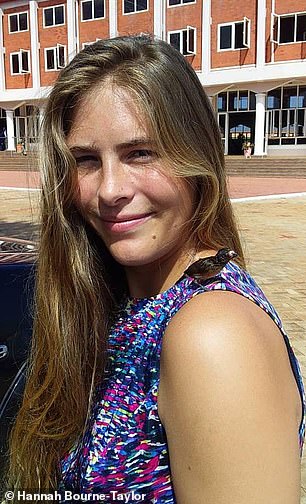
Bourne-Taylor did not even realize how agonizing her daily experience of OCD was. It was certainly the most debilitating case I have ever heard of, and I am no stranger to OCD. Not only was she plagued by the diagnostic, endless bouts of checking and re-checking, but she “en-souled” the objects of her checking – that is, she imbued them with a “soul.” When she rearranged a can of beans that was crookedly misaligned from the other cans, she imagined the can was suffering from being out of sync with the rest of the clan. Her most severely consuming preoccupation was when she and her husband moved into a home in the far reaches of the jungle, which had a lovely swimming pool. The first time she went to take a dip, she became aware of ants falling into the pool. “Making eye contact” with the ants put her profoundly in touch with their emotional experience, and she became obsessed with saving them from their terrifying drowning deaths. She did not want the luxury of her swim to be at the cost of their fragile lives. Not only did she build bridges of palm fronds to enable their safe rescue, but she got up repeatedly during the night to make sure they were OK. The ants occupied virtually all of her waking life. And it was a secret and solitary world. She did not even tell her husband, who was to be the first person she ever told of her OCD, until she was 31.
Although we don’t learn much about Bourne-Taylor’s childhood, we know that her family “moved often.” It certainly sounds bereft of attention, like a vacuum of solitary neglect. She describes herself as “bird-obsessed,” and every spring when her favorite birds, the swifts, returned to her area in the UK, she was overjoyed as if returning to life. As the wife of a devoted bird lover with a history of extreme neglect, it is not hard for me to imagine her primary relationships being aviary.
When Bourne-Taylor was in her early thirties, her husband (ironically named Robin!) got a job assignment in the far reaches of Ghana. They relocated, and it was then that she seemed to decline deeply, sinking into her most paralyzing depression. That is when the preoccupation with the suffering ants descended on her, consuming most of 24 hours a day. Until she met the finch.
Of course, it is my rallying cry that attachment, or lack thereof, is the source of both the most profound of injury and most profound healing. And although I have known many a survivor of trauma and/or neglect whose first perhaps only safe attachment was their own child, and plenty also whose preferred attachments are to animals rather than humans, I have never heard a healing story quite like that of Bourne-Taylor.

Finches are tiny birds, perhaps the height of Bourne-Taylor’s little finger. They are extremely reliant on the flock, being so small that when left to themselves, they are easy prey for any hungry carnivore. She describes them as “a flying snack” that will last barely minutes. The proverbial birds of a feather protectively flock together and have an elaborate communication/alarm system. The finch that Bourne-Taylor encountered was somehow lost or separated from the flock. Bourne-Taylor, knowing that was a likely death sentence for the little guy, worried desperately about him for the next 10 hours or so, checking on him repeatedly.
Ultimately she decided she better take some action. She attempted to imitate his chirp, and he chirped in reply, ultimately coming to her. What ensued was a remarkable love story that saved them both. The interested can look for her book, Fledgeling, in which she chronicles the whole thing. The little bird ends up making a nest in her waist-length hair, and for the next 84 days, until he is mature enough to be released into the wild, they spend 24/7 together, making a total of over 2,000 hours.
Bourne-Taylor never named the bird, her mission always being not to make him a “pet” but to return him to his natural habitat. When it was time to let him go, she enlisted her husband to do the “deed,” knowing she would find it unbearable. She also feared that he would not “make it” somehow, that a predator would get to him too fast. And it was a bittersweet time, of triumph and deep grief, when they parted.
Both Bourne-Taylor and the little finch were inalterably changed. What she discovered was that her OCD symptoms were gone. She concluded that the unrelenting preoccupation with care for her little buddy kept her so riveted in the present moment, it was like a compelling mindfulness practice that must have changed her brain. Her OCD did not return. She has since become an avid and prolific conservationist and author.

Of course, it is my rallying cry that attachment, or lack thereof, is the source of both the most profound of injury and most profound healing. And although I have known many a survivor of trauma and/or neglect whose first perhaps only safe attachment was their own child, and plenty also whose preferred attachments are to animals rather than humans, I have never heard a healing story quite like that of Bourne-Taylor. Again, I do not know her trauma story, but nonetheless, the little finch was as successful as any therapist I have ever seen.
It is a hard sell for survivors that relationships can be anything healing, especially as they have ever been so fraught, dangerous, and ambiguous at best. But I do know that as effective as any of the exquisitely helpful and essential modalities for trauma healing are: somatic therapies, EMDR, Neurofeedback, psychedelics, none are sufficient without the healing of the attachment wound: attachment with a sentient other. For survivors of neglect, even coming to truly believe that is a challenge and a main task of healing. It is a default to imagine it is impossible or just not worth it. I have also seen that when a client somehow breaks through to buying in, their healing takes off. A good therapist, as I like to say, is necessary and insufficient, meaning that talk therapy is not enough, but it is essential. My two cents, and I would not take you anywhere I haven’t been!
Bourne-Taylor never had the luxury to find out about the rest of the story about her beloved little finch. In a way, he was like “the one who got away.” Similarly, I often never find out what became of clients I had that I cared about a lot, and then under whatever circumstances, they flew from the nest. They might not even imagine how much I had cared, just as I could not imagine that my therapist cared about me. It was her “job,” so why would she think of me when I was not in her sight? Neglect teaches us to imagine that even when we are in view, we barely exist in the mind of the other, if at all. Bourne-Taylor reminds us that the healing bond works in both directions, which is one reason why couple’s therapy is so profound. And although a good therapist does not rely on or “use” their client for their own ends, it is an undeniable privilege to be in such an intimate and essential role. Like Bourne-Taylor, it is bittersweet when people are truly ready to fly on. I like to reassure them that when they do, the door is open should they wish to return for a single visit, a stint, or even another run together. It doesn’t happen that often, which is fine. And I don’t stop watching the horizon for a little flutter of wings.
Today’s song:
My book “Working with the Developmental Trauma of Childhood Neglect: Using Psychotherapy and Attachment Theory Techniques in Clinical Practice” was published on August 31st. It provides psychotherapists with a multidimensional view of childhood neglect and a practical roadmap for facilitating survivors’ healing.
From an early age, I harbored both fascination and perhaps preoccupation with the body. Certainly my own, but really everyone’s. I was curious about sex, obsessed about food and weight, athletics, healing, all of it. I did not think I was smart enough to be a doctor, but I thought about it. In graduate school, I chose a specialization in somatics, even though back then, somatic psychotherapy did not have nearly the foundation of science and neuroscience it has now. I pored over Wilhelm Reich’s Function of the Orgasm because it integrated the essential worlds of psychology, sexuality, and politics in a way that profoundly resonated with me, those being three areas of exploration that consumed me and still do. I am gratified that the body has come to occupy center stage in the field of trauma, and even in a weird way, how the pandemic has forced us all to be mindful of the body and of health. It has also illustrated how profoundly matters of the body affect our mental health and even vice versa and worldwide.
Admittedly, I neglected the vast population of disabled or “differently abled” people. I don’t know if out of fear, denial, or simply oblivion. Another population that is invisible and forgotten, abandoned or cast out. I remember telling my husband early in our relationship, “if ever I can’t move, please shoot me.” I simply could not imagine being able to live if not fully “able-bodied.” (I am ashamed to remember it.) Our office has an elevator and a “disabled” parking space. I figured I was “doing my share.” Oy vey.
I recently heard an interview with a young woman introduced as a blind, queer, African American hip hop artist, Young Ant. She was talking about disability in the music industry, and what it is like to be a blind performer – something I had never thought about. Watching her rap and dance on YouTube was eye-opening. I had never considered how a performer finds their way gracefully onstage, dances, and looks cool moving, not to mention the accessibility issues of most or certainly many venues. Ant is on a mission to awaken the world to this.
I was impressed by the recently released movie, Box of Rain, a movie not about the Grateful Dead, but about the culture of Dead Heads, by the mention that way back in the 1970s, the Dead had a little platform in the audience at their shows for wheelchairs. That was radical in its time: the same era in which then-President Nixon killed what would have been the Americans with Disabilities Act. Many species destroy or abandon their “imperfect” young, and sadly, many human parents and fellow citizens are not much better. I am humbled to find another “blind spot” in my awareness, another big point of neglect and injustice.
A man featured in Box of Rain, a longtime Dead Head, was Jim LeBrecht, who worked as the sound engineer for the Dead for many years. He is also a longtime friend of my best friend. Of course, I was excited to tell her about seeing Jim in this new movie. She asked me if I had ever seen another movie he had produced, Crip Camp, about a summer camp in the Catskill mountains of New York, specifically for disabled kids. I was intrigued.
Rarely have I seen a more moving and graphic depiction of the power of affiliation, what it is like to be in a group of others with a similar experience to one’s own. In the world of trauma and neglect, we are well aware of the power of the group: what it is like to be in the company of others with some sort of similar experience who understand without any words. Some of us have had the good fortune to have been in such a group and found it indescribable. I am not much of a movie person, as I always say, “I am way too stingy with my reading time,” but this one is a must-see (and it is available on Netflix).
The film also makes a powerful point of how (yes, we ever return to it) the original attachment with primary caregivers so profoundly affects the sense of self. The film opens with Jim narrating,
“When I was born,” he says, “they did not expect me to live more than a couple of hours.” In the visual footage, a grainy old black and white home movie, we see little Jimmy as a toddler, blissfully happy, laughing and ambling, climbing and tumbling on his plump little arms. Although we do not see his parents, it appears that he feels secure and safe enough to explore widely, move and grow, even to become the teenager who has the gumption and grit to imagine and aspire, hope, and actually become the sound engineer for his favorite band. And those parents obviously got him to Camp Jened, lovingly referred to as “Crip Camp.”
At camp, everyone had one or another disability, and for the first time ever, felt free and accepted. They did what all kids do at summer camp: sports, art, music, experiencing nature and the outdoors, and communal living. With a culture of non-judgment and helpfulness, they pushed each other’s wheelchairs, carried those that needed it, and understood each other’s sometimes strained or challenged speech.
In the larger world, apparently, there is a definite hierarchy or pecking order of disabilities, with the “Polios” at the top rung and the “CP’s” (those with cerebral palsy) at the bottom. Not here. It was moving to see how carefully and thoughtfully the “CP’s” difficult verbalizations were both listened to and comprehended, sometimes “translated” or summarized by a comrade. And my memory was jogged.
I remembered a time, the one time in my long and sweaty waitressing career, that I waited on a really famous person. I worked in a fancy place not far from UC Berkeley and had the honor of serving a large dinner party celebrating the luminary physicist, Stephen Hawking. I watched the tiny man in his wheelchair, fitted out with many super-high-tech devices to help him communicate with the throng of scientists and other intellectuals fawning over him, myself included. What a rarity in today’s “ability-supremacist” world.
My favorite part of Crip Camp was when a “CP” named Judy laughingly told the story, in her somewhat garbled speech, “I was getting older, and I did not want to die a virgin! With a twinkle she declared, “So I had an affair with the bus driver! A week or so later, I had a terrible abdominal pain. I went to the doctor and turned up a diagnosis of gonorrhea. The doctor was flabbergasted, incredulous! He could not imagine that anyone would want to f— me! As soon as I got well, I went back to school and got a master’s degree to become a sexuality educator.” Judy became an activist and vocally championed the cause of disabled sexuality. She also married happily, although she laughingly added, “my in-laws accepted me, but they said to their son, ‘couldn’t you have at least married a ‘Polio?’”

Admittedly, I neglected the vast population of disabled or “differently abled” people. I don’t know if out of fear, denial, or simply oblivion. Another population that is invisible and forgotten, abandoned or cast out.
Our dad, when he had throat cancer, required a complicated surgery where they had to break his jaw and build a new one, out of steel. Always vain and proud of his strapping good looks, he was now disfigured. He was 50. Amazingly it did not seem to phase him (the insulation of narcissism?). Years later, I even asked him about that. He said it never bothered him. By then, he was fond of saying, much like Keith Richard, “I’m happy to be here! I’m happy to be anywhere!”
I once had a client who finally accepted his history and the idea of being a survivor of childhood neglect. He said, “I want a disabled placard for my car that says “Child of Neglect!” It is a blessing and a daily challenge to accept who we are.
Have a look at Young Ant rapping and dancing with her white cane. And thanks Jim!
Today’s Song:
My book “Working with the Developmental Trauma of Childhood Neglect: Using Psychotherapy and Attachment Theory Techniques in Clinical Practice” was published on August 31st. It provides psychotherapists with a multidimensional view of childhood neglect and a practical roadmap for facilitating survivors’ healing.
My course with Quantum Way is now available for registration!